



Tired of overfished Bass waters? We hear you. Pretty much everyone is hunting for a low-pressure honey hole these days. But what if we told you the secret isn’t hiding on the map? Your bait isn’t the problem, either! To get the Bass action you love in the country’s most popular fishing grounds, all you have to do is switch up your target. Bass pros, meet your new obsession: Spotted Bass fishing.

Spotties run smaller than Largemouth and Smallmouth Bass. They’re less common, too. Don’t let any of that give you the wrong idea, though. Spotties bring as much grit to the fight as a Largemouth – with some unique twists. They may be only half as popular, but there’s nothing half-Bassed about them.
How to Identify Spotted Bass
Spotted Bass (Micropterus punctulatus) belong to the Black Bass family, making them a Sunfish species. You can recognize them based on the small, dark spots that punctuate their pale bellies – hence their Latin name punctulatus! Anglers often call them “Spots,” “Spotties,” or “Diamond Bass.” But you may also hear them referred to as “Kentucky Bass.”

As you may have guessed, Spotties are related to Largemouth and Smallmouth Bass. Despite their smaller size, they put up an impressive fight. The family resemblance doesn’t end there: Spotted Bass look a great deal like their cousins. What’s more, they occasionally interbreed with Smallmouth Bass, generating several hybrid species.
There are technically three subspecies of Spotted Bass: the Northern Spotted Bass, Alabama Spotted Bass, and Wichita Spotted Bass (unique to West Cache Creek in Oklahoma). But, for the average angler, this is splitting hairs.
When you’re out on the water, it will be much more important to recognize any Spotted Bass compared to Largemouth and Smallmouth.
Spotted Bass vs. Largemouth and Smallmouth Bass
At a glance, you may find it hard to tell a Spotty apart from other Black Bass. Stare long enough, and you certainly will start seeing spots!

The good(ish) news is that these fish look much more like Largemouth Bass than Smallmouths, so you can rule out the latter pretty fast. All you really have to take into account is their markings:
- Smallmouth Bass are greenish brown with faint vertical stripes.
- Spotted Bass are green with one dark horizontal stripe (the lateral line).
That single stripe doesn’t guarantee you’re holding a Spotted Bass, though – it could still be a Largemouth. But you can rest assured it’s not a Smallmouth. Unless you hooked a Hybrid, in which case it will look a little bit like a Smallmouth and a little bit like a Spotted Bass. Have fun with that…!
Most of the time, you’ll be scratching your head at the difference between a Spotted Bass vs. Largemouth. Here are some key features to look for:
- Jaw. Largemouths are the only Black Bass species with a jaw hinge behind their eyes. This makes their mouths extend past the rear corner of their eyes. Other Bass (including Spotties) have shorter jaws that do not reach past their eyes.
- Lateral Line. Largemouth Bass sometimes have a dark lateral line – but sometimes, they don’t! Spotted Bass always have this “stripe” down their sides. Look closely, and you’ll see triangular or diamond shapes along it. On a Largemouth Bass, this line is less defined and looks more like one long smudge.
- Upper Spots. Spotted Bass have dark spots along their backs. Largemouths may show some spotting on their backs, but it’s usually faint.
- Lower Spots. Both species have small spots on their bellies. On a Largemouth, these are typically hard to see, whereas a Spotty’s stomach is lined with rows of tiny dots you can’t miss.
- Tongue. If looks are too deceiving, reach inside and tickle their tongue. Spotted Bass have a rough tooth patch on their tongues that feels like sandpaper. Largemouth don’t have any rough patches on their tongues.
Now, let’s talk size. Anglers often describe Spotted Bass as a lot like Largemouths only smaller. This is generally true, but not a given. Mature spotties grow 12–17 inches and typically weigh ½ to 3½ pounds. In some waters, they grow larger and will commonly reach 4–5 pounds. Anything bigger than that is a trophy.
Compared to your average Largemouth at 16 inches and ½ –4 ½ pounds, Spotties only poll slightly behind. The difference is that Largemouths reach much bigger trophy sizes, at which point they dwarf their spotted cousins.
Best Spotted Bass Fishing Spots
With all that confusion out of the way, let’s get you off to the perfect spot to catch some Spots! You’ll find them in many lakes, streams, and reservoirs across the country – usually while fishing for other Black Bass. If this species has climbed its way to the top of your catch list, here are some places where you’re almost guaranteed to have some luck.
Lake Guntersville, AL

Lake Guntersville is a name Bass anglers know well. But you may have overlooked the Spotty population ’til now. The lake spans tens of thousands of acres, rife with submerged timber, riprap, and many secondary pockets and backwaters. Spotted Bass thrive in this variety – from rocky edges to deeper structure near creek channels.
Spring and fall are often excellent for Spotted Bass fishing, when they feed in shallow cover along with other Bass species. There’s no minimum size limit for Spotted Bass in Lake Guntersville, and the species falls within the aggregate bag limit of five Black Bass per day.
Lake Okeechobee, FL

Lake Okeechobee’s reputation for Largemouth Bass fishing is no secret. But beyond the spotlight, Spotted Bass steal the show. Look for them in deeper areas, especially around the edges where clear, moving water mixes with vegetation lines. The Kissimmee River outflow and canal systems connected to “The Big O” create the kind of current and oxygen-rich zones that Spotted Bass gravitate toward.
Fishing here is year-round, but your best odds of encountering Spots are in cool months, when Bass stack up in deeper cuts and along hard-bottom edges. The lake’s incredible abundance of forage – especially shad – keeps every species feeding aggressively.
Black Bass regulations in Okeechobee follow statewide rules. There’s an aggregate five-fish daily limit in Florida, with only one Bass allowed over 16 inches.
Lake of the Ozarks, MO

This sprawling reservoir in central Missouri may not get top billing, but Lake of the Ozarks offers a variety of opportunities – so long as you know where to look. Shallow cover hides less pressured fish, while deeper, more isolated pockets hold larger Spotted Bass. On clear-water days, artificial lures that match the forage will trigger strikes.
Late spring through early summer and fall are prime times to fish for Spotties here. Missouri has a combined bag limit of six Black Bass per day. In Lake of the Ozarks, you can only keep Spotted Bass that measure 12 inches or more.
Lake Fork Reservoir, TX

Anybody fishing for Bass in East Texas knows that Lake Fork is near the top of the list. While it’s best known for Largemouths, it also supports a thriving Spotted Bass population.
Lake Fork offers hundreds of miles of shoreline, lots of flooded timber, submerged structure, and a complex mix of coves, humps, channels, and woody cover – ideal terrain for Bass. Fall, winter, and spring are often productive. Many locals also find night fishing effective in the hot Texas summers when Bass seek deeper, cooler water.
There’s no minimum size limit for Spotted Bass on Lake Fork. The general Black Bass bag limit of five per day applies.
Clear Lake, CA

The “Bass Capital of the West” may be better known for Largemouth and Smallmouth, but make no mistake, Clear Lake sees its share of Spotted Bass. In fact, this is a great place to bag multiple species.
A broad mix of shoreline, pockets, rocky points, and shallow flats keeps the Bass comfortable while keeping you on your toes. Spring and early summer typically see productive shallow-water action here. As the water warms, Bass push deeper, so look for them near ledges, rock piles, and suspended near structure.
There’s an aggregate bag limit of Black Bass per day in California, with a minimum size limit of 12 inches.
How to Fish for Spotted Bass
If you’ve ever fished for Largemouth or Smallmouth, you already have a head start. Many lures and techniques carry over when fishing for Spotted Bass.
The main difference is in locating these fish, as they tend to hold in deeper water. Look for them around current seams, rocky points, riprap, ledges, submerged timber, or steep banks. They’re especially likely to hug the bottom in summer to keep cool.

You’ll also notice a difference in their temperament. Where Largemouth Bass can be fickle, Spotties are consistently ferocious. They don’t display the same aggression as Largemouths, but they are predators who fight pound for pound. When hooked, they dive straight down. Rather than tossing fast baits their way, tempt them with topwater lures.
Whereas Largemouth Bass are solitary, Spotties tend to school up – especially when tailing bait fish. When one strikes, it’s likely that others are nearby, allowing you to invest more time in one place.
That said, you can rely on similar techniques that you would normally use for other Bass:
- Spinning and baitcasting offer a lot of versatility. Don’t be afraid to play around with soft plastics, jigs, crankbaits, and spinnerbaits. You name it, and it will work if conditions are right.
- Drop-shotting and vertical jigging work well when fishing along drop-offs, submerged timber, or near deep structure. This is usually where you’ll find Spotted Bass in winter as well as late summer. Slab spoons and reapers are a couple of lure recommendations.
- Crankbaits and deep-diving lures will also help you target Spotties suspended mid-water and along deeper ledges.
- Topwater fishing may not be the go-to method of choice, but it has its place. Remember that Spotties don’t chase baits the same way Largemouth do – they take an interest in lures that sit at the surface. Buzzbaits, walking plugs, or prop baits can trigger explosive strikes when used in low-light conditions.
Spotted Bass Fishing Gear
Ready to go sporting for some Spots? Here’s the basic gear you’ll need to get started:
Rods & Reels
- A 6′ 6″–7′ 2″ medium-light or medium spinning/baitcasting rod is good for finesse methods like drop-shotting or light jigging.
- Use a medium baitcasting rod for heavier jigs, crankbaits, or when fishing deeper structure.
Line & Leaders
- 6–10 lb fluorocarbon or monofilament line will suffice. This gives you a good balance of sensitivity and stealth.
- If you plan on fishing around fairly heavy cover or structure, consider a heavier fluorocarbon or braided line (15–20 lb test) with a 6–8 lb fluorocarbon leader.
Hooks
What hooks to rig will depend on your bait and lure selection:
- When fishing live bait and small artificials, use #4 or #6 size hooks.
- For drop-shot baits and smaller worms, use wide-gap offset hooks (1/0–2/0). Invest in extra-wide-gap hooks for thicker baits.
- For bottom-hugging presentations, use ⅛–¼ oz jig heads paired with Texas-rigged worms or other soft plastics.
Best Bait & Lures for Spotted Bass
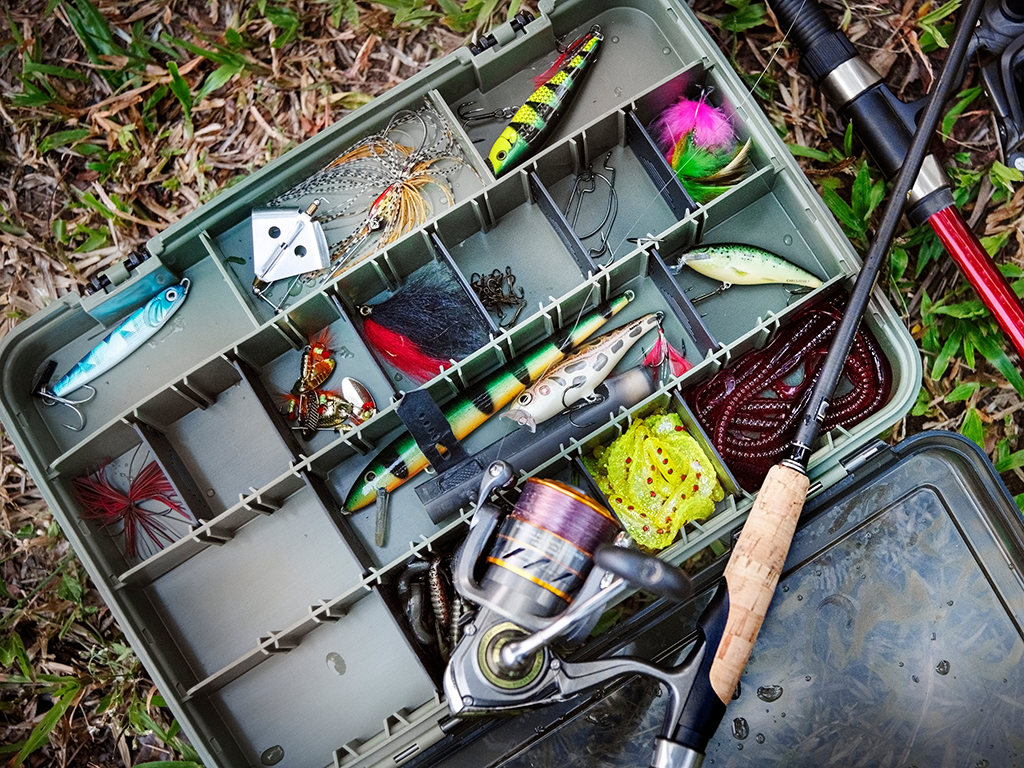
The main thing to have in mind when fishing for Spotties is to downsize your usual Bass baits by about ¼ ounce to account for their smaller mouths. However, the baits and lures for Spotted Bass depend on what conditions you’re fishing in.
- Soft plastics are the go-to choice. We’re talking craws, worms, and stick-worms, especially green pumpkin, brown-craw, or natural crayfish/shad colors.
- Small or medium crankbaits (deep-diving or lipless) in shad or craw patterns work well, too. These are useful when the fish suspend or roam deeper.
- Spinnerbaits or bladed jigs are great in stained water or when there’s current.
- Drop-shot rigs, shaky heads, and tubes are effective in deep water or vertical cover.
- Topwater baits work well on occasion. Think poppers, walking plugs, or prop baits during low-light or active surface-feeding periods.
When to Fish for Spotted Bass
Spotted Bass bite pretty consistently year-round. But you’ll notice a shift in their behavior through the seasons, which predicts where you can catch them.
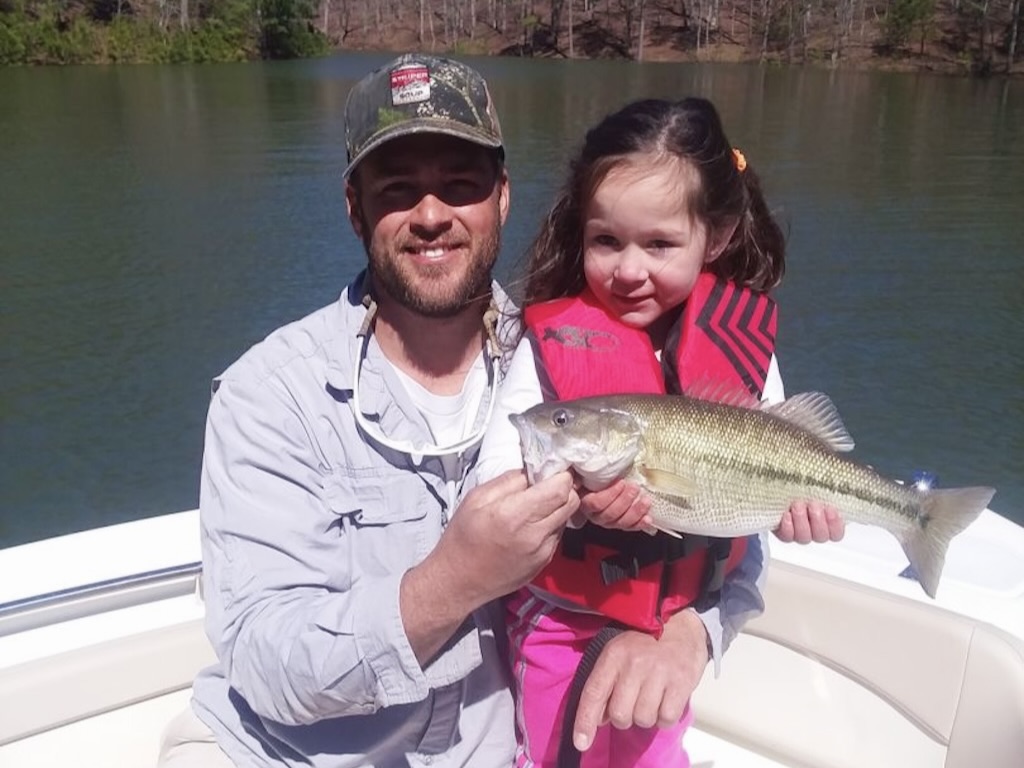
In spring and early summer, they move shallow to spawn. Target them near creek mouths, flats, gravel banks, or lower-gradient shoreline structure. This season is the right time to test out some topwater lures.
By late summer, fish often move deep or suspend in deeper channels. Focus on ledges, humps, and around submerged structure. Deep-diving lures, drop-shots, and jigs work well at this time, though you may still get some surface strikes.
As the water cools in fall, many Spotted Bass stage along current seams, creek backs, channel edges, or deeper structure where they cozy up through winter. This is when jigging comes into play and it can be a great time to catch larger fish.
Always check local regulations to make sure the legal season for Spotted Bass is open. Likewise, get familiar with size and bag limits if you’re allowed to keep your catch.
Spotted Bass Fishing FAQs
Spotted Bass: A Spotless Record

Spotted Bass don’t carry the same clout as their cousins, but if you ask us, that’s a blessing. It means you can cast a line in crowded waters knowing your target will bite. And you can almost always count on a Spotty to take your bait. Before long, you’ll be in a rod-bending fight while everyone else is still tracking down Largemouths and Smallies.
Don’t get cocky, though! These fish know how to keep you guessing. They make use of varied habitats and dive deeper than other Bass, forcing you to switch up your bait and technique. Anyone who’s fished for Spotties will tell you: you’re the one who’s about to get hooked.
Are you a keen Spotted Bass angler? Do you have some tips and tricks you’d like to share? Reach out and let us know in the comments below!

