



Most days, you don’t catch trophy Bass by accident. You catch them by refusing to fish like everyone else…
You know what it’s like. The morning is perfect. Crisp. Warm. The possibility of what could happen bounces around in your head. You arrive at the ramp and… you’re greeted by what must be hundreds of anglers. Some ahead of you, some behind you, and everyone is mechanically throwing baits at the bank. Repetition is the name of the game. Quantity. It’s like they’re doing chores, not really engaged or enjoying the moment. Cast, reel, cast, reel, cast, reel.
They’re mowing.
Some are pulling up fish. Dinks. Several of them. And sure, if you join in the rhythm, you’ll boat a few as well. It’s tempting because we can see some action, but is that really what you want? When you look back at pictures and stories that are the most vivid, are they from days where 50 dinks hit the deck, or that one big girl that made your heart leap out of your chest? The one that was so heavy it was like setting your hook into a tree trunk, with big, deep, powerful head shakes and a THUMP-THUMP-THUMP of the tail that spun the boat in her direction?
You know the answer.
A Big-fish Mindset
The anglers that catch trophy fish consistently are a different breed. They wake up like you and me. Make coffee like you and me. Get ready for the day like you and me. Load their gear and head to the water like you and me. But here’s the difference.
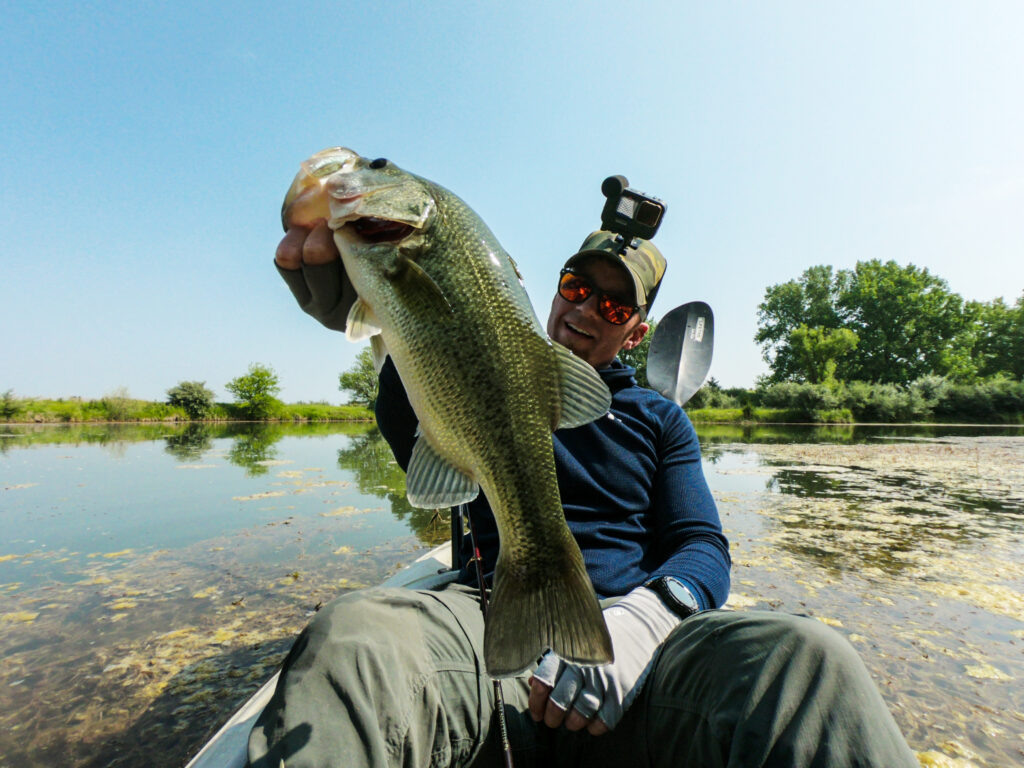
They’re thinking about that one quality bite, and they’re willing to spend the entire day, week, or month looking for it.
It’s a big-fish mindset, and I struggle with it, too. When you only have 90 minutes to fish here and there between family obligations and work, it’s tough. I get it, because I live it too.
However, I do have a desire to catch bigger fish, just like you. I also have good news for you. By making a few adjustments, you can target the biggest fish in a system more effectively and give yourself a much better chance at a trophy without completely neglecting medium-sized fish.
It’s a hybrid approach that will help you catch bigger Bass.
In this article, I’ll show you how to prepare for The Three-Bite Day. It’s a strategy-first approach to catching bigger Bass on purpose by fishing with discipline. We’ll also cover the minimalist gear choices that will help you maximize hookups and landing percentage when those big bites show up.
Concept #1: Understand Efficiency
Big Bass don’t get big by being reckless. They also don’t get big by wasting energy.
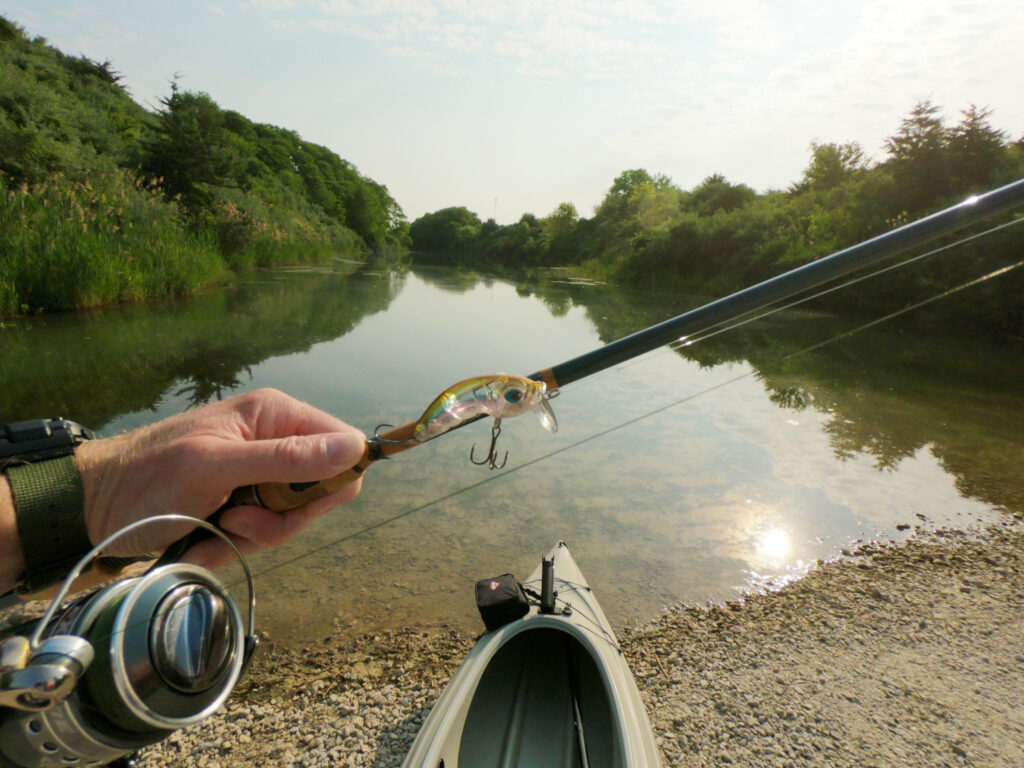
Trophy Bass are efficient machines. Larger-than-average Bass know that by maximizing their energy-to-calorie ratio, they’ll stay fuller longer and with less overall effort. So what does this mean in simple terms?
Bigger baits catch bigger fish.
Small Bass can afford to chase smaller meals because they require fewer calories and are still competing to exist. But the bigger ones don’t chase – they ambush. Largemouth Bass in particular are known for this, and the big gals can afford to wait until they have a shot at something worthwhile.
So what does this mean for our Three-Bite Day?
Big baits don’t always work – but it’s where we always want to start. We also want to stick with bigger baits longer than we have in the past, understanding that bigger baits naturally filter our bites. Fewer dinks means fewer interruptions. The minimalist trick here is to upsize without maximizing. You don’t need to throw a magnum stickbait, but consider an 8-inch instead of a 5-inch. You don’t need to throw a massive swimbait, but consider a chunky 6-inch and stay away from the downsized 2.5-inch paddletail that catches Bluegill and Crappie.
If you upsize without maximizing, you’ll likely catch more than one fish a day, but you’ll start to cherry-pick some of the biggest Bass out of the system.
Concept #2: Cast Where the Big Fish Live (Not Where It’s Easy)
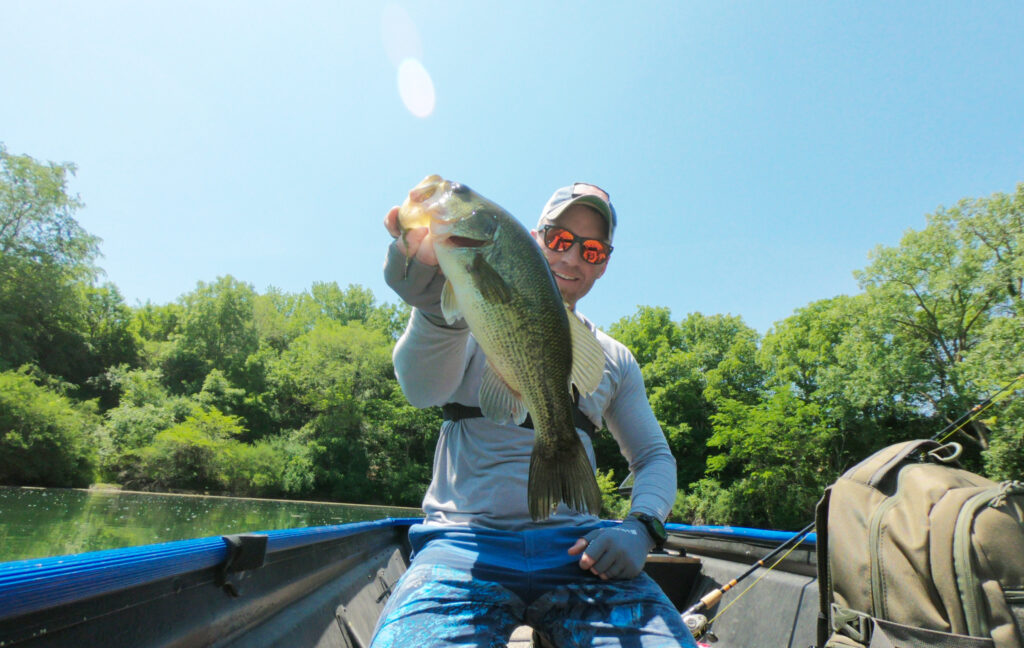
I used to cast the entire shoreline of every lake I would fish, telling myself that I was “covering water.” But if you do this long enough, you begin to realize that certain patterns and combinations of visible cover and underwater structure are simply higher-percentage spots.
You also begin to realize certain areas are consistently unproductive.
Are there universal rules that are always true? No. But fishing is a game of averages, and just like we can filter our bites and select for bigger Bass by upsizing our baits, we can also increase our chances at a monster by placing casts in areas where other anglers fear to tread.
We’re going to intentionally look for areas that make other fishermen uncomfortable.
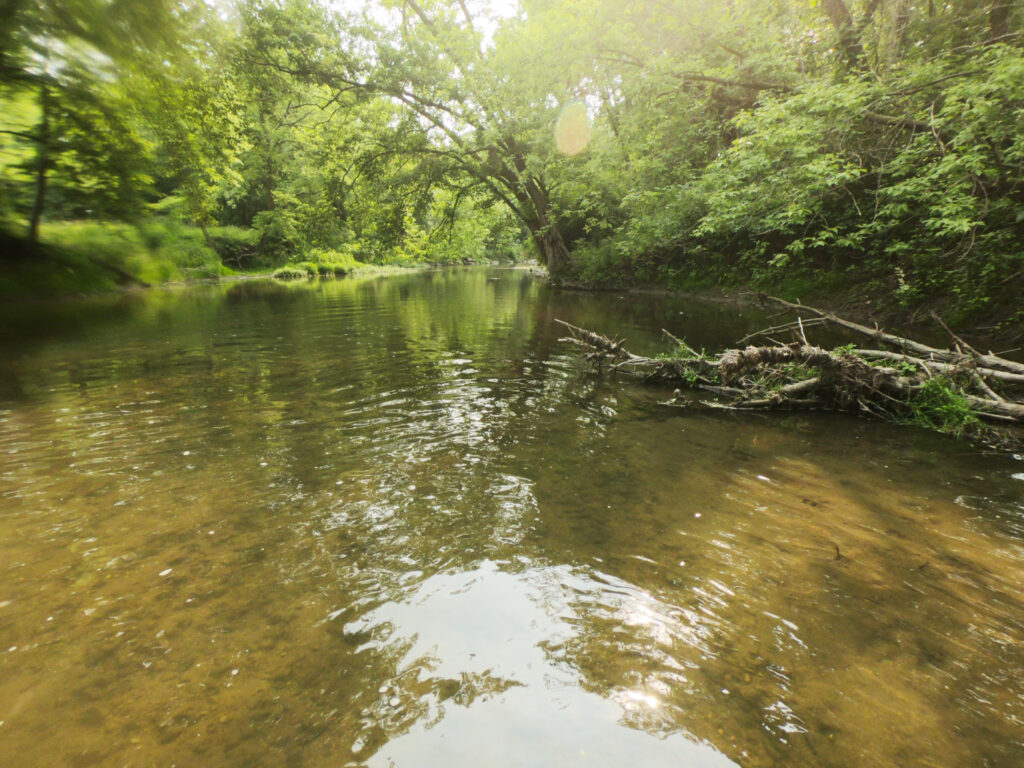
Whether I’m fishing a creek, a lake, a pit, or a river, I’m going to be looking for the thickest, nastiest cover and the little areas tucked back and away from everyday boat traffic. If I’m on foot, wading, or in a kayak, I’m going to spend the night before my trip looking at satellite images to see if I can identify backwater areas that are protected from the average angler. Spots that require me to hike through brush, leave my boat on the shore while I wade along a small incoming creek, or make my way through dense trees just for a shot at casting to some unbothered, unpressured bruisers.
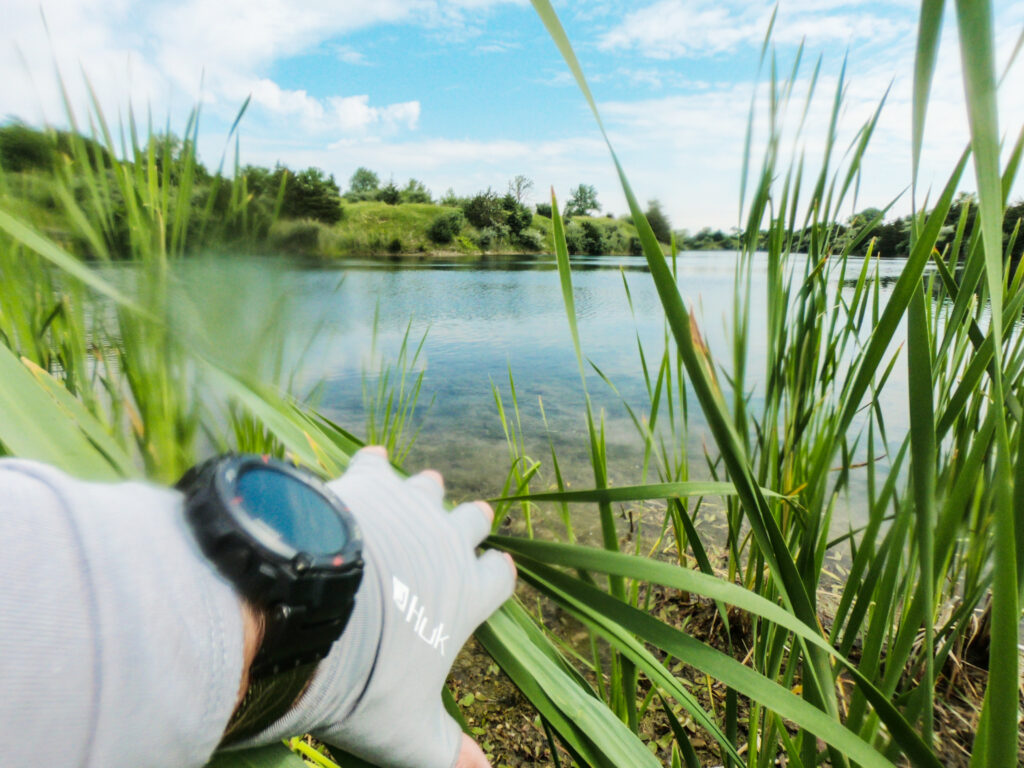
If you can see cover, so can everyone else. Those spots are always overworked. Instead, seek out cover hidden in areas that are uncomfortable to fish. Most anglers won’t be willing to put in the effort to fish there.
Concept #3: Optimize Cast, Cadence & Speed
We all like to move fast.
As I mentioned above, fishing is a game of averages, and on average more casts mean more fish. However, more casts worked incorrectly is not a recipe for success – quite the opposite.
Fish won’t tolerate a noisy entry, and they will get lockjaw if they can see you. Wear “quiet” clothes, and don’t bang around in the boat. Longer casts are mandatory, but don’t fling your bait 50 yards into the sky and let it slam down in 6 inches of water.
In addition to practicing your casts so you can make accurate, quiet entries, you also need to dedicate time on the water to experimenting with cadence – both the cadence of your casts (how many you’re making and how long you spend in an area) and the cadence of your retrieve. You need to experiment with crawling, hopping, popping, jerking, dragging, and yes – even deadsticking baits in areas where you believe there is a quality fish to be had.
Smaller fish will often chase (remember, they’re still competing to exist), and this is dangerous because it conditions us as anglers to fish faster and give up sooner than we should on areas we know hold fish. We expect immediate results because of the way the dinks behave… but we’re not targeting the dinks anymore.
We have to break this habit.
Concept #4: Gear Up for Bruisers
If you’re going to throw bigger baits, you’re going to want to use heavier gear.
When going to go into areas and work cover that other anglers are afraid of, you’re going to want to use heavier gear.
If you’re going to extract big Bass – really put the wood to them, move larger baits in their mouth, and hammer home a quality hookset – you’re going to want to use heavier gear.
But from a minimalist fishing perspective, the key here is balance. Just like we want to use larger baits without completely maximizing, we also want to use heavier gear without completely maximizing.
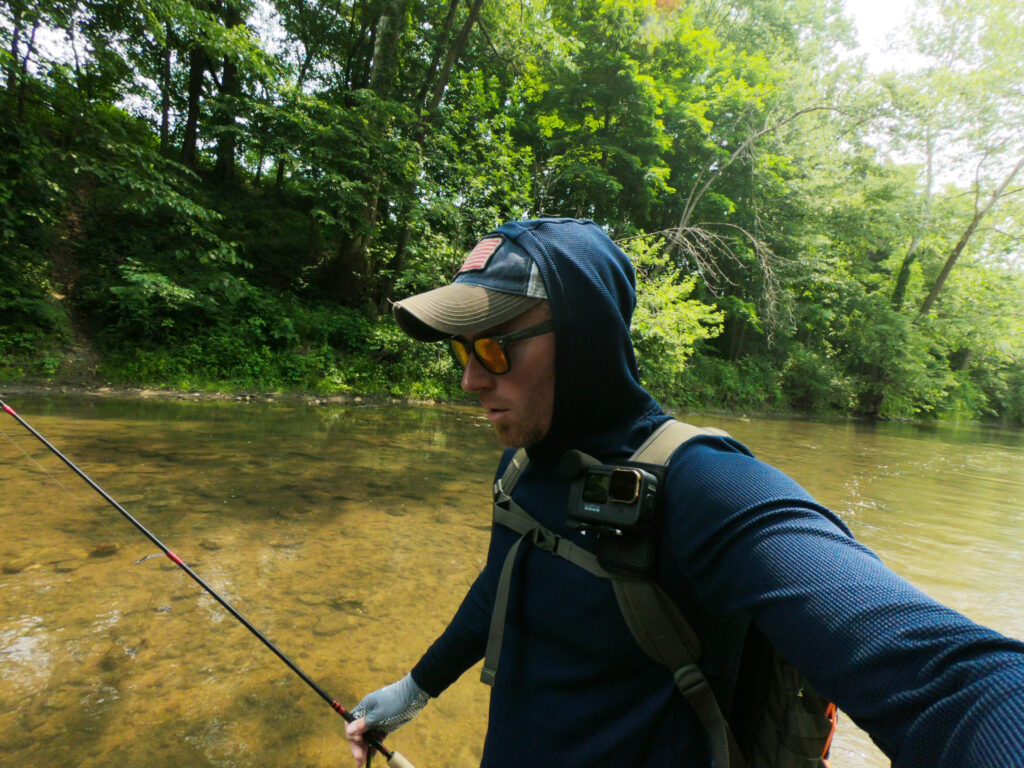
For example, a heavy casting rod (or even a heavy spinning rod) can offer extra leverage for hooksets and hoisting big Bass onto the bank or boat. You’ll also need strong line and a beefy hook, but have you ever noticed how much your casting distance is reduced by using 50-pound braid compared to 30-pound braid? It’s substantial.
Have you noticed how much harder you have to set a 6/0 hook buried in a massive plastic compared to a light-wire hook that is exposed?
What about a clean drag? Quality knots? It all comes into play, and the answer isn’t to just “buy more gear.” New gear never creates more fishing time. A cleaner system does.
Find a rod that is stout but not a broom handle. Line that is strong but not rope. A hook that is larger but also extremely sharp. Knots that are reliable and easy to tie in tough conditions. Reels that are reliable workhorses, with drags that can be counted on.
Optimize. Keep only the best, and balance your tackle to match your goals.
Concept #5: Remember That Constant Bites No Longer Equal Success
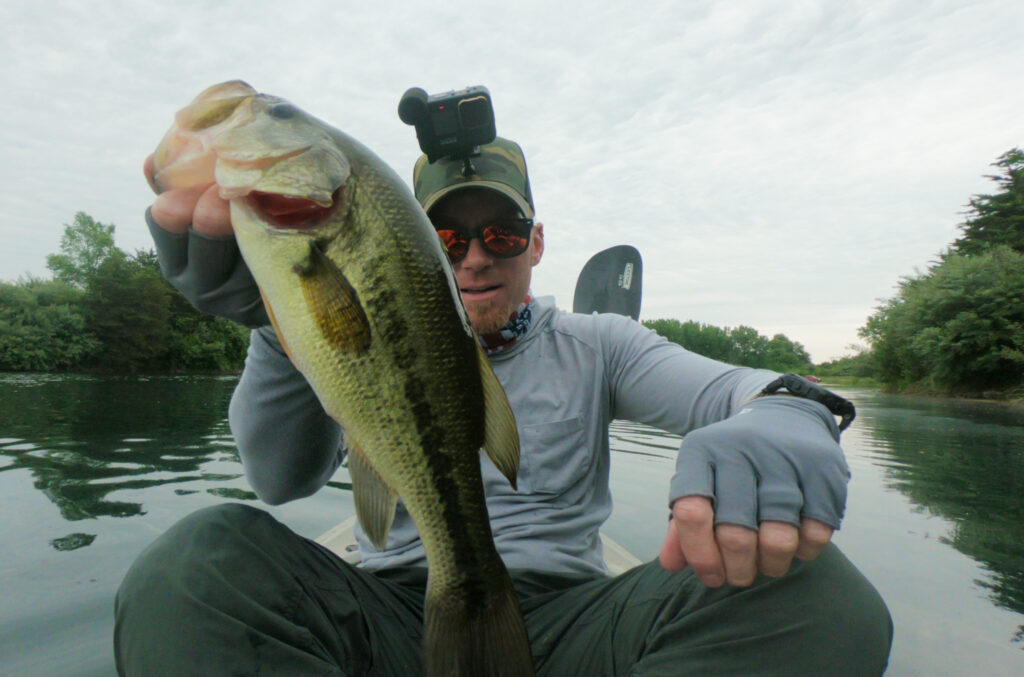
The biggest challenge that comes with moving toward The Three-Bite Day is not financial or even physical – it’s psychological. If you go back to measuring success by quantity, you’ll abandon the plan. This kind of fishing can work well, and it can help anglers with limited time target bigger fish, but you must apply the process intentionally.
If you accept this and dedicate yourself to the process, the results will come.
I’m living proof.
When you finally start to hoist bigger, beefier Bass into the air for photos – even with responsibilities like kids, work, and everything in between – when other fishermen start to wonder how you’re the one pulling big Bass from local lakes that “only have small fish because they’re so pressured,” when you’re comfortable with long stretches of time without interruptions and begin to savor the sounds of the breeze, the water, the birds, and the bugs, knowing full well that in time a big bite will come…
Then you’ve mastered The Three-Bite Day. And anglers – it’s a great way to fish.
Tight lines and Godspeed, Patriots.
What are your thoughts on The Three-Bite Day? If you’re looking for some guidance with catching big Bass, go out with a fishing guide first and get some experience in!
