



The Chesapeake Bay is one of the world’s great fisheries. With hundreds of rivers flowing to nearly 4,500 square miles of relatively protected waters and access to the Atlantic, it’s home to some truly impressive fish. But one creature stands apart. Striped Bass – or Rockfish, as they’re known here – top the list for every angler who visits.

Chesapeake Bay rockfishing is something of an institution. Heck, these creatures have even been named Maryland and Virginia’s state fish! Monster specimens put on the fight of a lifetime for even the most experienced angler. Meanwhile, there are also plenty of small fish for beginners to target. And, wherever you cast your line, chances are there’s one biting.
In this guide, we’ll show you why Chesapeake Bay’s Rockfish population is so revered. We’ll let you in on some of the best techniques, top spots, and everything you need to know for a successful Chesapeake Bay rockfishing adventure. So without further ado, let’s dive in!
Why Rockfish?
So we’ve given you a little taste of what makes these creatures so special, but let’s expand on that. These fish are highly-prized all over the East Coast, and for a number of good reasons. They grow to incredible sizes. They put up an immense battle. And they’re delicious to eat.

As if that wasn’t enough, they inhabit pretty much all kinds of environments. From the tributary rivers out to the brackish bays and deep ocean waters, there’s always the chance of coming across one of these beauties. They say “The more the merrier,” and that’s certainly true with Chesapeake Bay Rockfish!
We also briefly mentioned that anglers of all skill levels can target these feisty creatures. That’s no word of a lie! Bigger specimens offer a monster test for the more experienced anglers, with smaller Rockfish providing a great introduction to beginners. These fish also like pretty much any bait, so you can try out a whole range of techniques (but more on that later).
Why the Chesapeake Bay?
We’ve already said that Rockfish are aplenty in the Chesapeake Bay, but it’s worth emphasizing again. They’re everywhere! Even though Rockfish stocks are lower than they once were, this is still the best place to find big numbers of them because about 80 percent of the entire East Coast stock spawns in the Chesapeake’s tributaries. These fish don’t begin migrating out of the bay until they reach large sizes. And once they do begin migrating, they return to the bay for spawning season.

As with every serious fishing destination, the Chesapeake Bay makes the most of what it’s got. That means you’ll have no issue finding somewhere to cast your line. From wading the flats upstream to parks on the side of the bay, to piers, bridges, and charter boats, there’s something for everyone.
And, there’s stunning beauty all around. Whether you’re in the shadows of the skyscrapers in downtown Baltimore, in Maryland’s luscious state parks or wildlife refuges, or down on the boardwalk in Virginia Beach, you can cast your line and enjoy more than just fishing.
Recent Chesapeake Bay Catches
Fresh fishing reports from anglers
How to Go Fishing for Chesapeake Bay Rockfish
Now that we’ve got the introduction out of the way, let’s get down to what matters – the fishing. As we said, there’s no shortage of ways for you to land prized Chesapeake Bay Rockfish. From hands-on approaches like snap-jigging to letting your lines do all the work as you troll, there are numerous ways to sink your hook into this beauty.
Fly Fishing

Reserved for the hardcore angler, fly fishing for Rockfish in the Chesapeake Bay is simply magic. Hit the rivers, flats, or even cast from shore and get ready for plenty of fun. We mentioned that these creatures will take just about any bait, and that goes for streamers and other bait fish imitation flies, too. Use fast-sinking lines, and make sure to keep your offering at the fish’s feeding level for the best chance at success.
When you feel the bite, get ready for an immense battle, as these creatures do everything to get off the end of your line. Pound for pound, you’re hard-pressed to find a better fighter in the Chesapeake Bay, especially on a fly, so make sure you’re prepared.
Fishing from Shore (or a Pier)

If you’ve not quite mastered the art of fly fishing, don’t worry. There’s plenty of opportunities on conventional gear from shore. Bring your waders and get into the rivers and flats or hit the banks and parks that line the bay’s shoreline. You can even check one of the dozens of piers on offer on all sides of this famous waterway.
Again, as these hungry creatures will take any bait, fishing on foot can be just as effective as any other method. Cast your line around structures that draw bait fish for your best bet. Dock pilings, oyster mounds, and duck blinds can all hold fish, but especially try casting near rocks – they call them “Rockfish” for a reason!
Trolling

Head out with a charter guide, and you’ll spend at least some of the time trolling. This effective way of targeting numerous fish will see you drag multiple lines in the water behind the boat. That way, the bait will mimic the moves of the bait fish, enticing the bite of Rockfish and more.
Aboard such a vessel, you’ll be able to cover a range of fishing grounds unimaginable on foot. Trolling with tandem rigs and umbrellas trailing soft-plastic paddletails is the most common tactic, although spoons, tubes, bucktails, and plugs can be in the mix as well.
Chesapeake Bay Rockfish Fishing Spots
As the bay spans 200 miles from top to bottom and stretches 35 miles across at the widest point, picking a Chesapeake Bay fishing spot can be tricky. The good news is that wherever you go, you’re probably in for some good fishing. If you want to get your hands on the famous Chesapeake Bay Rockfish, keep an eye out for diving birds and leaping bait fish… These are signs of hungry Striped Bass feeding on menhaden and anchovies.
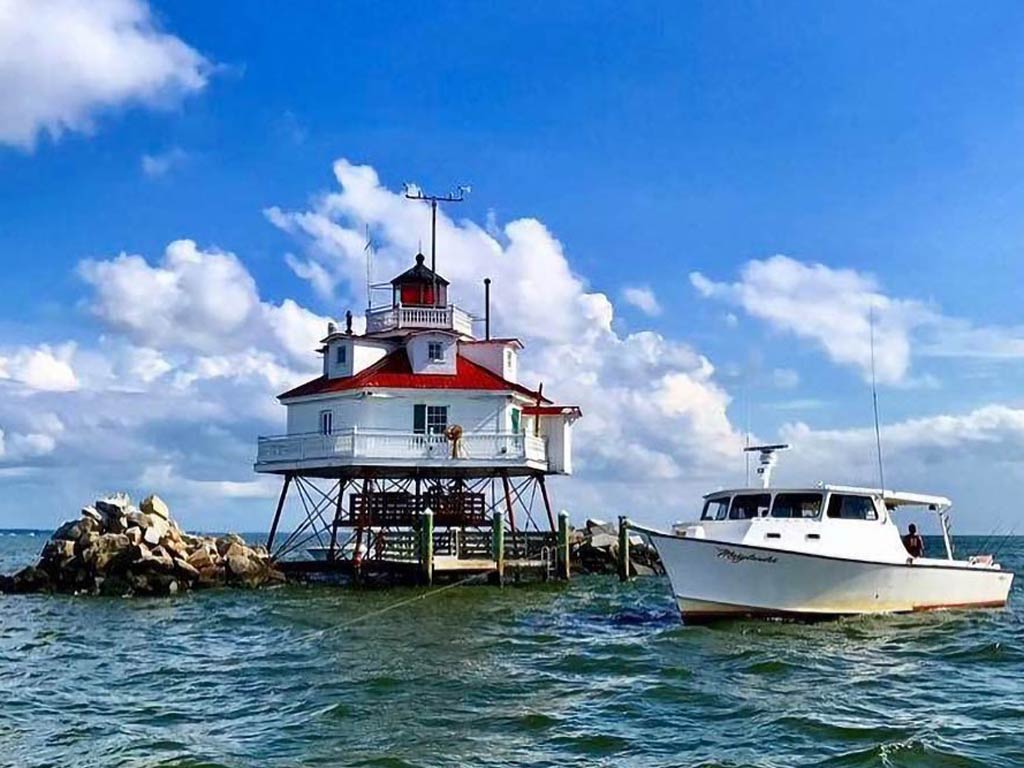
The bay is split up into an upper, middle, and lower section, and here’s our pick of where to go to get the biggest bang for your buck:
The Upper Chesapeake Bay
- Susquehanna Flats. As this mighty river flows to sea, the flats are a great spot for targeting Rockfish. Shoal draft boats or kayaks are needed to fish here, as the flats are surrounded by channels. But don’t worry if you don’t have your own – plenty of guides work these waters!
- Fort Smallwood Park. Located at the mouth of the Patapsco River, this park features a boat ramp, a beach, and – most important for shoreline anglers – a 380-foot fishing pier.
- Tolchester Bar. Located out in the bay, this is a favorite hotspot for charter boats specializing in live-lining spot for Striped Bass. Many anglers call this spot “Rockfish candy”, as these striped predators can rarely pass up an easy meal. of the bay. The rusty lighthouse is worth a visit alone, but the fishing here is simply incredible.
The Middle Chesapeake Bay
- Bloody Point. Bloody Point is at the junction between the Chesapeake and Eastern Bay, so tidal currents often swirl and collide in the area to create ideal feeding conditions for Rockfish. The Chesapeake Bay record Rockfish was caught just off this productive spot!
- Tilghman Island. Another productive spot that sticks out into the bay at the mouth of the Choptank River, Tilghman Island supports a charter fleet of its own.
- Chesapeake Beach. Centrally located on the middle Chesapeake with a short cruise to multiple fishing grounds, this is another charter hotspot. Although the fleet is smaller today than it was years ago, Chesapeake Beach was once known as the charter fishing capital of Maryland. of the river for the best action and you could land Rockfish after Rockfish, after Rockfish.
The Lower Chesapeake Bay
- The Chesapeake Bay Bridge Tunnel. This bridge-tunnel complex is over 17 miles long and is famous for attracting huge winter Stripers. Slow trolling or drifting live eels is the ticket here.
- Hampton Roads Bridge Tunnel. Another bridge-tunnel with endless fish-attracting structure, the “HRBT” spans the mouth of the James River where it meets the bay.
- The Elizabeth River. Night fishing is super popular here, especially late in the fall when bait fish congregate under the lights along the developed shoreline. Hit the miles and miles of shoreline or get out on the water and you’re in for a treat.
When to Go Fishing for Rockfish in Chesapeake Bay
It’s possible to catch Striped Bass year-round in Chesapeake Bay. The best time to catch a trophy-sized specimen, though, is when migrating fish are in the bay.
The fish arrive in early winter, then stop feeding when temperatures drop into the mid-30s. The bite fires back up in early spring as the waters warm. After spawning, the trophies migrate back out of the bay but “residen” Rockfish – up to about 30 inches long – start biting. Fishing can remain good throughout the summer, improving even more in “Rocktober” when the fish begin to fatten up for the winter.
Chesapeake Bay Rockfish Regulations

For a full rundown of what you can catch, where, and when, check out the regulations for Maryland, the Potomac River Fisheries Commission, Washington, D.C., and Virginia.
However, you’ll definitely need a fishing license to go after those rockfish unless you’re fishing on a charter boat or with a friend who has a licensed boat. You can fish in Maryland with a Virginia license, provided you’ve signed up to the MD Saltwater Angler Registration, and vice versa. Find out how to get a VA license with our handy guide, or head over to the Maryland DNR website to apply for your MD license. Either license also entitles you to fish in waters regulated by the Potomac River Fisheries Commission, but there’s a Washington, D.C. license required for fishing the waters within our nation’s capital.
A Word on Conservation
Despite the strict regulations in place, Striped Bass populations have been dropping for several years due to several springs with poor spawning conditions. You can do your bit to help keep the Chesapeake Bay population healthy for many anglers to come. Make sure to use single hooks instead of trebles, use circle hooks when fishing with bait (as required by law), and handle the fish gently.
When practicing catch and release, minimize the time they’re out of the water and carefully place the Rockfish back in the water, as throwing them in could cause unnecessary shock. Oh, and only land fish with a net that has rubber-coated mesh, not bare knotted nylon.
Smaller fish can be held by the jaw (their teeth are like sandpaper and won’t cut you), but larger fish should be held horizontally and supported around the anal fin with a second hand. Remember to wet your hands before handling them, as anything dry that touches the fish can remove its protective coating of slime.
Chesapeake Bay Rockfish Fishing FAQs
And You’re Good to Go!

There you have it, now you’re an expert in Chesapeake Bay rockfishing, too. Of course, the best way to see what all the fuss is about is by getting out on the water yourself. Wherever you are in this famous fishery, serious fun awaits. Get ready for the trip of a lifetime and plenty of tasty rewards!
And now over to you. Have you ever landed a Chesapeake Bay Rockfish? Let us know all about your experiences in the comments below!


