



At its February 2026 meeting, the Florida Fish and Wildlife Conservation Commission (FWC) approved significant changes to Spotted Seatrout (Speckled Trout) regulations statewide. So, this article is your manual and best friend that guides you on where and how to approach fishing for Spotted Seatrout.
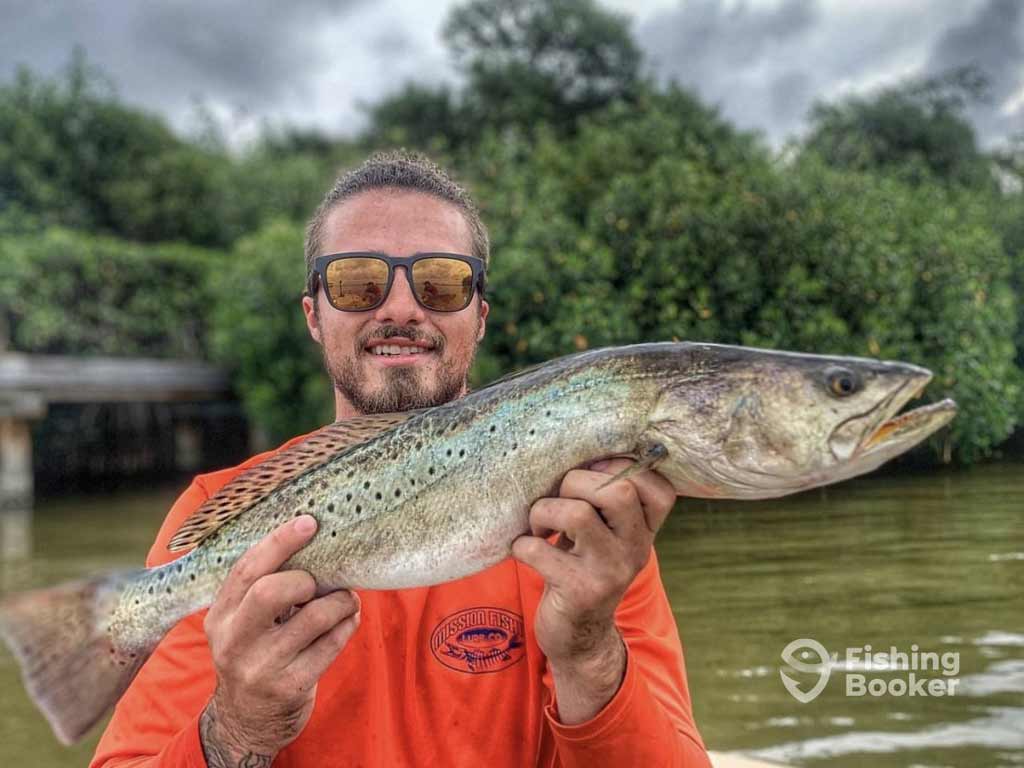
The new rules took effect April 1, 2026, replacing the previous system with nine dedicated management regions – each carrying its own bag limits, slot limits, and closed seasons for both recreational and commercial fishing.
What Changed: Nine Regions, Nine Sets of Rules
Under the new framework, every angler targeting Spotted Seatrout, also known as Speckled Trout in Florida, needs to know which region they’re fishing before heading out. A slot limit means you can only keep fish within a set size range; anything outside that window must be released. There is also an over-slot allowance, but it doesn’t apply to all the regions.
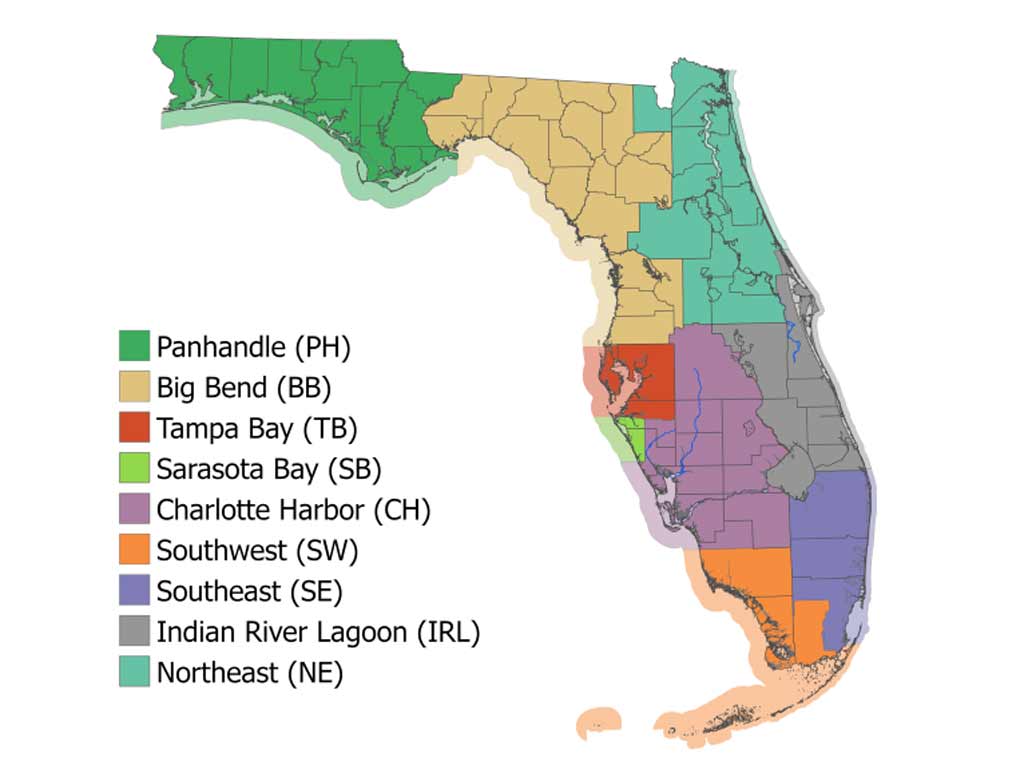
Here’s the breakdown of the new Spotted Seatrout recreational fishing regulations by region:
Panhandle
- Season: Open March 1 to January 31; closed throughout February
- Bag limit: 3 fish per person
- Slot limit: 15–19″
- Over-slot: One fish over 19″ per vessel; one per person from shore
Big Bend
- Season: Year-round
- Bag limit: 5 fish per person
- Slot limit: 15–19″
- Over-slot: One fish over 19″ per vessel; one per person from shore
Tampa Bay, Sarasota Bay, Charlotte Harbor, Southwest, and Southeast
- Season: Year-round
- Bag limit: 3 fish per person
- Slot limit: 15–19″
- Over-slot: One fish over 19″ per vessel; one per person from shore
Indian River Lagoon
- Season: Open January 1 to October 31; closed November 1 to December 31
- Bag limit: 2 fish per person
- Slot limit: 15–19″
- Over-slot: None
Northeast
- Season: Year-round
- Bag limit: 3 fish per person
- Slot limit: 15–19″
- Over-slot: None
Why the Change?
The FWC described these regulations as part of its holistic regional management approach – a framework already applied to Redfish and Snook in Florida. Rather than treating the state as a single fishery, this model evaluates each region across multiple factors, including fishing pressure, stakeholder experiences, and local environmental conditions.
Managing at a smaller regional scale gives the FWC more flexibility to address concerns that are specific to one area without affecting the rest of the state. The FWC noted the approach has received strong support from stakeholders statewide.
What Anglers Need to Know
With nine distinct regions now in play, knowing the Spotted Seatrout regulations matters more than ever. The Indian River Lagoon carries the most restrictive recreational rules in the state – a 2-fish limit and a 2-month closure, while the Big Bend region is the most generous one, allowing 5 fish per person year-round.
Before you head out and cast your line to target Spotted Seatrout (Speckled Trout), make sure you’re familiar with the latest region, bag, size, and season restrictions. You can always visit the FWC’s official Spotted Seatrout page for more information.
Should you need tips on how to fish for these beauties, our Speckled Trout Fishing Guide comes to the rescue. Check it out and boost your odds of landing a trophy catch.
Which region do you fish most, and how do these new rules affect your season? Hit the comment button below and let us know.
The concept and outline of this article were created by people engaged by FishingBooker. Artificial intelligence tools were used to flesh out and reformat information into a blog article. Before being published, this article was edited and fact-checked by FishingBooker staff.


