



There are some things hiding underwater that you don’t want to see up close. Flounder is probably one of them. Lying flat on the seabed, with both eyes rotated around to constantly peer up towards the light, they aren’t a pretty sight. But come New Jersey Flounder fishing season, everyone wants one.

These Flatfish may not look like much, but they’re famous for their amazing taste. Soft, flaky, and delicate. It’s no wonder that anglers come to New Jersey from near and far to grab their bag limit.
Winter or Summer – Flounders for Every Season
There are two types of Flounder in New Jersey. The one everyone’s talking about is the larger, more abundant Summer Flounder – also known as Fluke. There are more restrictions around when you can catch them, but they’re worth the wait. They’re often recognized as the most delicious Flounder species of all.
Don’t forget the Winter Flounder, though. These “Blackbacks” have a longer season and really kick off local fishing in the spring. Whichever you target, you’re in for a culinary – and angling – treat.
New Jersey Flounder Fishing Regulations
You can catch Fluke in the Summer, from May through September, and Winter Flounder almost all year round (except the middle of winter, confusingly!)
While the season is consistent statewide, Summer Flounder (Fluke) have different regulations depending on where you catch them. Delaware Bay and the waters leading into it have special regulations, as does Island Beach State Park.

If you’re fishing in and around Delaware Bay, you can keep up to three fish that are 17 inches or over in open season. This rule applies to all waters leading into Delaware Bay up to the COLGREGS line that separates the Bay from the Atlantic Ocean. The only exception is the Cape May Canal east of the Cape May Ferry Terminal, where the usual minimum size applies.
If you’re fishing at Island Beach State Park, then you’re able to keep smaller fish, from just 16 inches. But there’s a catch. You’re only able to take home two per day, instead of three.
| Species | Location | Jan 1 – Feb 28 | Mar 1 – May 3 | May 4 – Sep 25 | Sep 26 – Dec 31 |
| Summer Flounder (Fluke) | All waters except those mentioned below | Closed | Closed | Min length: 18”Bag limit: 3 | Closed |
| Delaware Bay and tributaries | Closed | Closed | Min length: 17”Bag limit: 3 | ||
| Island Beach State Park | Closed | Closed | Min length: 16” Bag limit: 2 | ||
| Winter Flounder | All | Closed | Min length: 12”Bag limit: 2 | ||
This chart applies to the 2026 New Jersey Flounder season. It is expected that, once published, the 2027 season will be at least as generous, if not more so.
Monthly NJ Flounder Fishing Breakdown
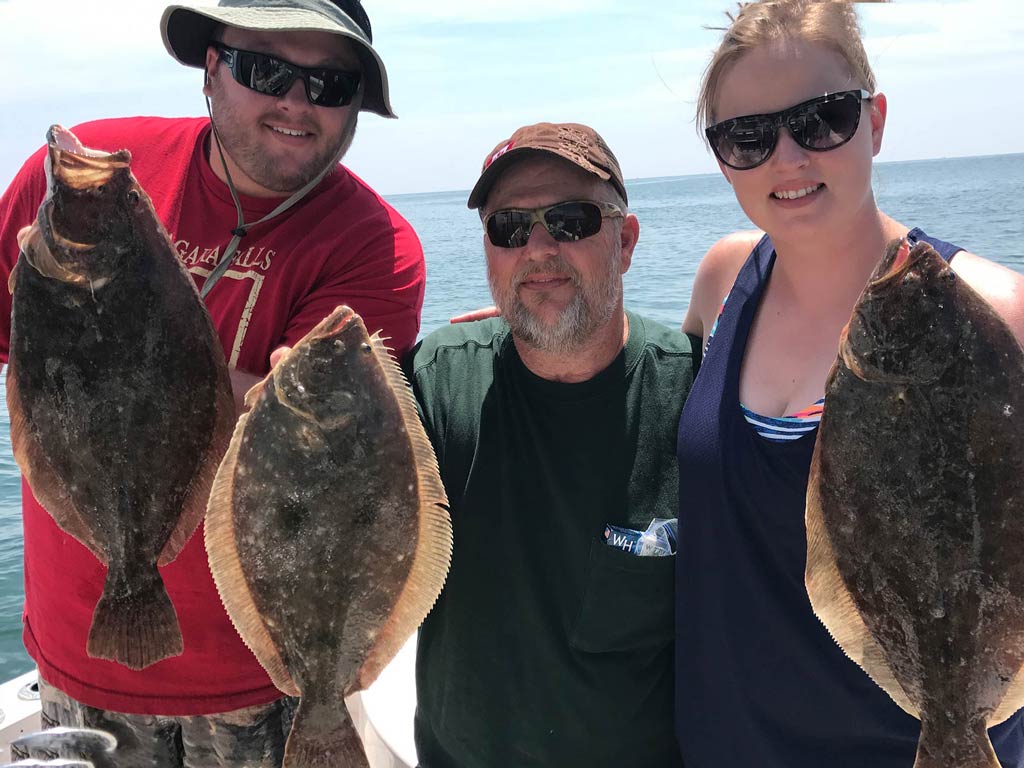
The first thing you need to know about New Jersey Flounder fishing is that these fish are migratory. They move to different areas according to the time of year, as they mature, grow older, and then lay their eggs to start the cycle back up again.
Summer Flounder have much more noticeable migratory patterns than Winter Flounder. You’re most likely to find them when the weather warms up as they spend their winters way out over the continental shelf.
Let’s take a closer look at when – and where – you can catch each of these Flounder species in New Jersey.
What anglers said about Flounder Fishing in New Jersey
January – February
Both Summer and Winter Flounder seasons are closed at this time of year, meaning if you catch them you need to release them back into the water. But we won’t complain. In the depths of winter, Fluke are hiding offshore and Winter Flounder are few and far between in back bays and channels. Honestly, they’re nobody’s top target right now.
March – April
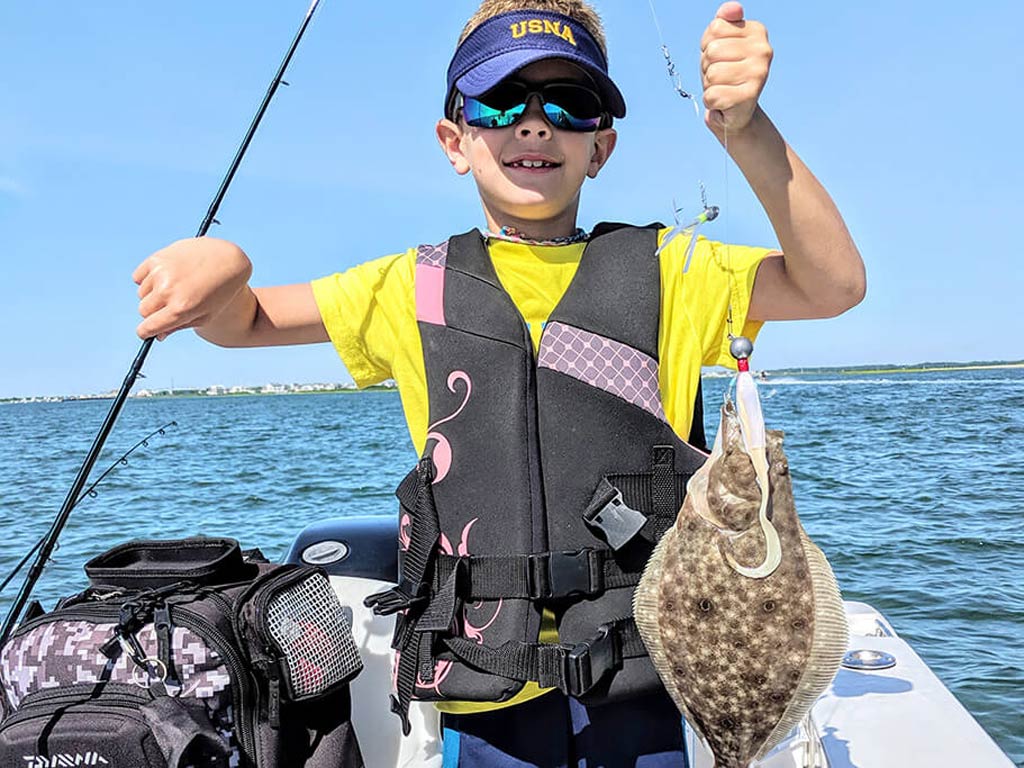
New Jersey Winter Flounder season usually opens at the beginning of March. From then on, the fishing only gets better. Winter Flounder love warm, sunny spring days in the back bays. That’s the beauty of this time of year: you don’t need to be an early riser to get your bag limit.
Blackback fishing heats up in mid-April and stays excellent through the end of May. Barnegat Bay is a prime spot, especially around the spill-out area of Oyster Creek.
By the end of April, you may have noticed the Flatfish in the back bays looking a little different. That’s because Fluke start to make an appearance at this time of year. Just be sure to catch and release them until the season opens.
May
New Jersey Fluke season usually opens in early May. This comes right on time, as by now the migration inshore has started for real. Most of the fish will be in shallow flats and backwaters, where they feed up during the warmest part of the day. Surf fishing and drifting the backwaters are popular techniques at this time of year, when Fluke are lounging in the shallow waters.
The extensive shallow flats in South New Jersey are prime for Fluke fishing in May. But there are also plenty of opportunities in the north of the state. The beaches in Sandy Hook, and Barnegat Bay, Shrewsbury River and Manasquan River are all Fluke hotspots.
June

As the waters get warmer, Fluke start to gather in deeper inshore waters. There are still plenty in the bays, but it’s time to start looking for them in channels, holes, and around ledges.
You’ll often find anglers targeting Fluke from the shore in Island Beach State Park at this time of year, while others focus on drift fishing upper Barnegat Bay or the channel in Grassy Sound.
July
July is a transitory time for Summer Flounder. Some are still in deeper bay waters, but you also start to find them nearshore. This is where they’ll spend the next few months fattening up around deeper structure before moving further offshore.
Many anglers fish for them around inlets, where the fishing can be all or nothing. Whole schools move from the bays into open waters, leading to an action-packed day or feeling like you’ve just missed the boat.
This is the beginning of “Doormat” season, where the truly big fish start to appear. Barnegat Light Reef, Axel Carlson Reef, Sea Girt Reef and Rattlesnake Rocks are just a few favorites. Of course, there’s the added bonus that these locations hold plenty of other fish, too. Tautog and Seabass, for example. Oh, and Delaware Bay, with its huge open waters, is as consistent as ever.
August

By August, most Summer Flounder have left the shallower inshore waters in favor of the nearshore structure we just mentioned. Most fish will be at least a couple of miles from shore by now, where they’re bedding down for the summer. That said, you’re still likely to find some in the deep waters of Raritan Bay and Delaware Bay.
The Barnegat Light Reef and the Manasquan Ridge off the Manasquan Inlet are prime locations for Doormats. As long as you fish above underwater hiding spots, you’re in with a chance.
September
As the water starts to cool, the last of the Summer Flounder move out of the bays into deeper offshore waters. Even as the days shorten, the action stays hot over reefs and structure.
This is prime time to make the most of NJ Fluke season and catch a Doormat while you still can. Soon, the season will close and the fish will start their 90-mile journey out into their winter residence over the Continental Shelf.
October – December
Like many species, Summer Flounder spawn in the fall. But they do so as they travel far offshore into deep sea waters. They’re not a target at this time of year – and even if they were, you wouldn’t be able to keep them. NJ Summer Flounder fishing season is closed, both according to the state rulebook and the behavior of the fish themselves.

If you’re really hankering for a Flatfish, though, don’t forget about Winter Flounder. Flukes’ smaller cousins are still available at this time of year, although they aren’t as plentiful as they are in the spring. Look for them in deeper, protected waters in back bays at the beginning of fall before they, too, tail off in December.
Flounder Fishing Tips By Season
To really master Flounder fishing in New Jersey, you need to match the way you fish to the time of year. But, there are a few simple rules to Flatfish fishing around here that apply no matter the season:
Drift, baby, drift. If you’re fishing from a boat, you’re going to be wanting to move… slowly. Drift at 1.5 knots or slower to mimic Flounder’s prey.
The bucktail doesn’t stop here. A bucktail teaser is the number one rig to use for Flounder fishing in New Jersey.
Something smells fishy. Fluke and Winter Flounder both hunt by scent. So even if you’re fishing with plastics, tipping with squid or using scented Gulp! lures can increase hookups.
Be patient. Flounder often “mouth” their bait, so wait a second once you’ve felt a bite. Then, lift firmly rather than with a sudden snap.

Now, we’ll get onto the specifics of seasonal Flounder fishing.
Early Season
In May, you’ll be looking for Flounder in the bays. While they hunt for baitfish in warm, protected waters, they can be fooled with small baits and light tackle. This technique is effective and some of the best fun you can have while Flounder fishing.
Mid-Season
Late spring and early summer see a change in the type of baitfish Flounder are likely to eat. At this time of year, the backwaters are flush with Atlantic Spearing – particularly around deeper areas like channels, holes, and dropoffs. Use larger baits around these deeper waters, around the 4–5 inch mark.
At this time of year, the fishing is usually best during the slack period through the beginning of the ebb current. Chartreuse or other bright-colored lures perform well in the clean, warmer water you get at this time of day.
Late Season

As Fluke start to migrate out of the bays towards deeper structure, their diet changes again. At this point, they’re on the hunt for Peanut Bunker around inlets. Once they settle on the reefs, they’re on the lookout for even larger prey, like juvenile Sea Bass and Crabs. This is peak Flounder season, and large baits and lures will give you the best chance of catching a Doormat.
New Jersey Flounder Season FAQs
It’s No Fluke That We Love New Jersey Flounder Season
As corny as it may seem, it feels like the fishing regulations smile on us when targeting Flounder in New Jersey. Here, open season reflects when the fish are most accessible, and we can target the biggest fish available. And whether it’s Winter or Summer Flounder we’re after, there’s one thing we can be sure of. We’re in for as much of a treat when the fishing’s done as we are while we’re reeling them in.
Do you love NJ Flounder season? What’s the biggest one you’ve ever caught? Or are you yet to try Fluke fishing for the first time? Let us know in the comments below!


