



With 2025 almost in the rearview mirror, it’s time to see what to expect in 2026 when it comes to one of the most sought-after reef species – Red Snapper. If the projects already planned for 2026 are any indication, next year will be all about this prized fish!

NOAA Fisheries and the Gulf States Marine Fisheries Commission have announced six partnerships and seven projects for 2026 to improve recreational angling opportunities for Red Snapper.
Let’s take a closer look at what awaits us in 2026…
What partnerships have NOAA and Gulf Fisheries formed?
In order to reduce data uncertainty and ensure the quality of collected information, the NOAA and Gulf Fisheries have teamed up with six highly respected institutions and organizations:
- Florida Fish and Wildlife Conservation Commission (FWC). As the state agency responsible for managing, protecting, and conserving Florida’s fish, the FWC plays a key role in all initiatives related to Red Snapper.
- University of South Florida (USF). Founded in 1956, USF is recognized as one of Florida’s leading research universities, making it a crucial contributor to Red Snapper data analysis efforts.
- Mississippi State University (MSU). MSU is a public institution with well-established methodologies necessary for Red Snapper data collection, research, and analysis.
- Mote Marine Laboratory. An independent nonprofit, Mote Marine Laboratory is recognized nationally and internationally for its leadership in marine science and education.
- LGL Ecological Research Associates. LGL is one of North America’s top ecological companies, specializing in marine research, conservation, and resource management.
- The Nature Conservancy (TNC). A global environmental organization, TNC is dedicated to conserving habitats and protecting nature.
Which Red Snapper projects are planned for 2026?
The projects developed in collaboration with the selected organizations range from collecting data through different methods, such as satellite imagery and mobile phone tracking, to doing comparative analysis and estimating reef fish discards.
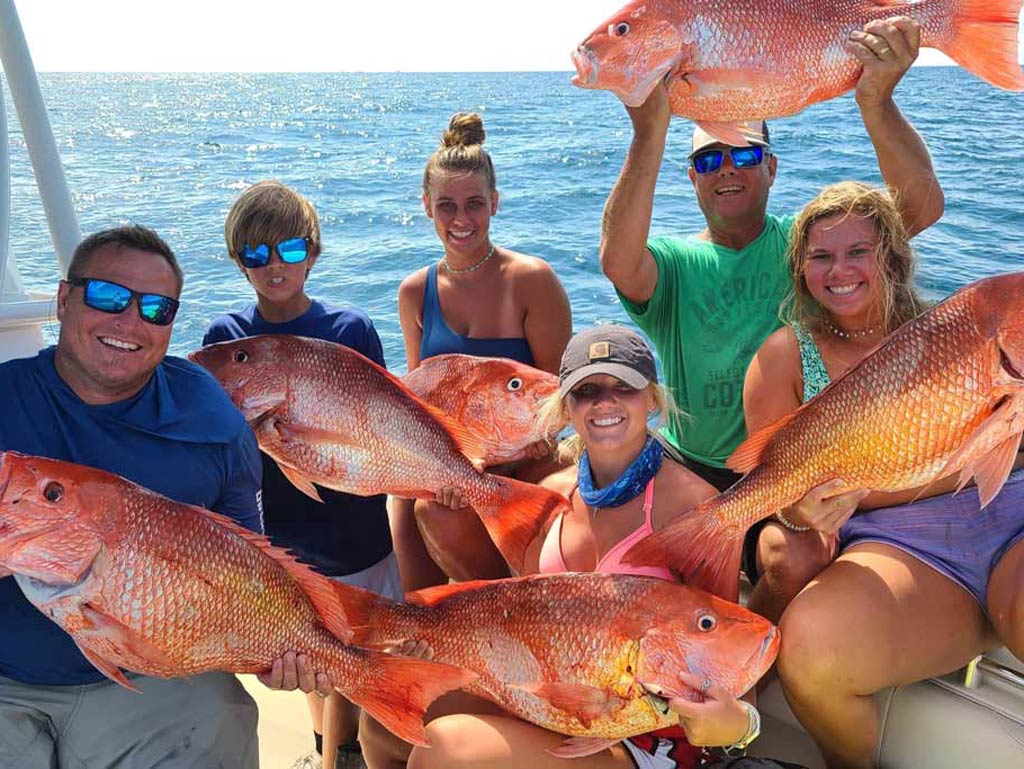
Here’s a quick summary of each Red Snapper project:
- Quantifying Recreational Fishing Effort. This project uses a mobile app to see how many recreational fishing trips are happening offshore. It’s a joint effort between USF and FWC, and focuses on three inlets in Northeast Florida.
- Calculating Private Recreational Fishing. Similar to the previous project, this research uses smartphone data, but LGL will also incorporate satellite imagery and aerial surveys to assess recreational fishing activity.
- The disCARD: Quantifying Reef Fish Discards. Led by MSU, this project gathers information from anglers through catch cards and electronic reporting to determine how many reef fish are returned to the ocean, as well as which species are caught.
- Determining Congruence between Discard Rates. This USF project compares data from the For-Hire At-Sea Observer Survey and Access Point Angler Intercept Survey to check how closely discards on recreational boats match what anglers report.
- Improving Recreational Fishing Effort Estimates. This Mote Marine Laboratory project uses shore-based cameras and AI to identify, count, and estimate the size of recreational fishing boats and angling activity.
- Estimating Reef Fish Discards through Comparative Analysis. Led by the FWC, this project focuses on collecting and analyzing discard patterns by monitoring how often reef fish are released on for-hire trips using electronic systems and catch cards.
- Estimating Private Offshore Recreational Fishing Effort. This initiative relies on satellite imagery, regional fishery data, and angler knowledge to identify recreational fishing in the Gulf. It also aims to develop reliable methods to support more precise management decisions.
Why do NOAA and Gulf Fisheries support these projects?
Red Snappers are one of the most popular fish species – both for recreational and commercial anglers. However, the Red Snapper data that’s currently available lacks precision and accuracy. So, the main objective of all the upcoming projects is to improve Red Snapper statistics.
The Administration has approved $18.5 million for improving infrastructure, estimating discards and efforts, and using advanced monitoring tools and sampling techniques in 2026.
When will these projects start?
In its official announcement, the NOAA didn’t specify the date for each project. However, we know that all projects are approved should begin as of January 1, 2026.
What do you think about the upcoming Red Snapper projects and partnerships? Will they improve Red Snapper data and angling opportunities? Which project is the most beneficial in your opinion?

