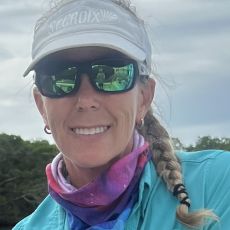
Capitano
Rachel Nobbe-Cato

Member since March 2015 Holmes Beach, United States
Sfondo
La Capitana Rachel Nobbe-Cato offre uscite di pesca emozionanti e gratificanti per pescatori e amanti dell'outdoor di tutte le età. Con base a Snead Island a Palmetto, Florida, Rachel's Charters serve gli appassionati di pesca nelle contee di Tampa, Venice, Manatee e Sarasota. Che tu sia un professionista esperto o un principiante, Rachel si assicura che ogni ospite si senta a proprio agio e pronto a recuperare una grande cattura. Vedere i suoi clienti portare a bordo una varietà di pesci è ciò che rende ogni uscita unica e memorabile.
Tecniche
Specialità: Pesca costiera e in baia – Snook, Redfish e Trout Quando in stagione: Tarpon, Spanish Mackerel, Sheepshead e Grey (Mangrove) Snapper Zona di pesca: Tampa Bay, contee di Manatee e Sarasota. Il porto di partenza è a Palmetto, FL. Imbarcazione: 24' Sheaffer alimentata da motore Yamaha 300

Ciao, sono il Capitano Rachel Nobbe-Cato

Holmes Beach, Stati Uniti
Sfondo
La Capitana Rachel Nobbe-Cato offre uscite di pesca emozionanti e gratificanti per pescatori e amanti dell'outdoor di tutte le età. Con base a Snead Island a Palmetto, Florida, Rachel's Charters serve gli appassionati di pesca nelle contee di Tampa, Venice, Manatee e Sarasota. Che tu sia un professionista esperto o un principiante, Rachel si assicura che ogni ospite si senta a proprio agio e pronto a recuperare una grande cattura. Vedere i suoi clienti portare a bordo una varietà di pesci è ciò che rende ogni uscita unica e memorabile.
Tecniche
Specialità: Pesca costiera e in baia – Snook, Redfish e Trout Quando in stagione: Tarpon, Spanish Mackerel, Sheepshead e Grey (Mangrove) Snapper Zona di pesca: Tampa Bay, contee di Manatee e Sarasota. Il porto di partenza è a Palmetto, FL. Imbarcazione: 24' Sheaffer alimentata da motore Yamaha 300

La Mia Inserzione Charter

Eccellente
4.9 / 5
(4 recensioni)
Holmes Beach
 Conferma immediata

Rapporti di Pesca

August forecast
August forecast
Lug 27, 2026 Holmes Beach
August Fishing Report: Inshore & Offshore Fishing Around Manatee and Sarasota County August brings some welcome relief after months of intense summer heat. Afternoon thunderstorms become more frequent, adding much-needed freshwater to our bays and estuaries. This helps lower salinity and slightly cool water temperatures, creating more comfortable conditions for baitfish and game fish alike. While bait will continue to be plentiful, expect to see a variety of smaller sizes throughout the month, making it important to match your hook size to the bait you’re using. August Tackle Recommendation One of my favorite techniques this time of year is still fishing with a free-lined live bait. With the reduced water clarity from summer rains, you can increase your leader size without hurting your chances. I recommend using a 30-pound fluorocarbon leader paired with a 1/0 to 3/0 circle hook, depending on the size of your bait. Snook Snook fishing continues to improve as water temperatures begin to cool slightly. Focus your efforts around the stronger tides, especially near points, passes, and deeper channels where fish will school as the spawning season continues through the full moon. On higher tides, cast tight against mangrove shorelines where snook move up to feed. As the tide falls, work deeper potholes and channel edges where fish retreat with the dropping water. My favorite technique is to cast well up-current and allow your bait to drift naturally with the tide. If you don’t get bit, simply recast and continue working down the shoreline until you locate fish. Presentation is everything when targeting snook—if the bait doesn’t move naturally, they’ll often refuse it. Spotted Seatrout Spotted seatrout fishing really begins to pick up in August. Start by locating healthy grass flats holding plenty of baitfish. Pay close attention to areas where tidal current cuts through the grass and creates small eddies, as these current breaks provide ideal feeding locations when the tide is moving hard. Position your boat with the wind at your back and cast up-current, allowing your bait to drift naturally through the strike zone. A popping cork can be extremely effective this month by slowing your bait’s presentation while adding subtle clicking sounds that help attract feeding trout. Spanish Mackerel Spanish mackerel can still be found inshore, but your best action will usually be offshore around reefs, hard bottom, and ledges where schools of bait are concentrated. When you locate feeding fish, don’t rush to anchor immediately if conditions allow the boat to drift slowly over the area. Instead, begin by chumming lightly with a mixture of live and cut bait. It doesn’t take much to get mackerel fired up. Fish a free-lined live bait using a 1/0 Mustad 2X Long J-hook, and watch your bait closely for sudden bursts of speed or nervous activity. Once you’ve found consistent action, either set the anchor or engage your trolling motor’s Spot-Lock feature to stay on the school. The key to success throughout August is following the bait. Whether you’re fishing shallow grass flats, mangrove shorelines, or offshore structure, locating healthy schools of baitfish will dramatically increase your chances of finding hungry game fish. Get out early, fish the moving tides, and take advantage of the cooler mornings before the afternoon storms roll in.
Continua a leggere
Winter Offshore fishing
Feb 11, 2026 Holmes Beach
We’re in the final stretch of winter here along the Gulf Coast. As a charter captain, this is how I approach the transition season: Watch the water temperature. Once it starts climbing into the mid-60s, inshore fishing will begin to improve. Be patient with the inshore bite. Until that water warms up consistently, action can still be spotty. Head offshore for steady action. Right now, offshore structure is where you’ll find the most consistent bite. Offshore strategy Focus on structure. Reefs, ledges, rock piles, and artificial structure will hold fish tight to the bottom. Fish the bottom. Use a ball jig or weighted hook to keep your bait where the fish are holding. Use natural bait. Live shrimp is always my first choice, but frozen shrimp will absolutely get the job done. Stay vertical. Drop straight down and maintain contact with the bottom for the best results. Fish moving water. Tidal flow is critical — no current usually means no bite. Plan your trip around tide changes and make sure there’s water moving across the structure. That current positions the fish and triggers them to feed. Know the regulations — Gulf west coast Florida Before you go, make sure you and your anglers are dialed in on Florida Fish and Wildlife Conservation Commission (FWC) and federal rules that apply in Gulf state and federal waters: Gag Grouper (recreational) Currently closed. The recreational gag grouper season for Gulf state waters is not open right now. Minimum size if/when it reopens: 24″ total length. Daily bag limit when open: 2 per person within the aggregate grouper limit (but 0 for captain & crew on for-hire vessels). Must be enrolled in the State Reef Fish Angler program to harvest reef fish from a private vessel. Hogfish (recreational) Minimum size: 14″ fork length. Daily bag limit: 5 per person. Season: Open year-round. Flounder (recreational) Minimum size: 14″ total length. Daily bag limit: 5 per person. Seasonal closure: Oct 15–Nov 30 each year. Mangrove Snapper (Gray Snapper) Minimum size: 10″ total length in Florida state waters. Daily bag limit: 5 per person within the 10-fish snapper aggregate. No closed season — harvest is allowed year-round. In federal waters (beyond 9 nautical miles), size and bag limits may differ (e.g., 12″ and up to 10 per person within snapper aggregate). Sheepshead (recreational) Minimum size: 12″ total length. Daily bag limit: 15 per person. No closed season. Late winter fishing is all about timing and adjustments. Fish deeper, fish slower, stay on structure, fish with tidal flow, and know the regulations — it keeps your charter legal, safe, and successful on the water.
Continua a leggere
What is The Difference Between Inshore a
Gen 3, 2026 Holmes Beach
Blog What is The Difference Between Inshore and Offshore Fishing Charters Inshore vs Offshore Fishing Charters Anna Maria Island. What is The Difference Between Inshore and offshore fishing charters – both offer incredible experiences for anglers visiting Anna Maria Island, but they are very different styles of trips. Understanding those differences helps guests choose the right charter with Captain Rachel so they can match their expectations, skill level, and sense of adventure to the right day on the water. Inshore trips focus on the calm, protected waters of bays, grass flats, mangrove shorelines, and backwaters close to the island. Offshore trips head out into deeper Gulf waters, where bigger boats, heavier gear, and longer runs open the door to large, powerful species and dramatic environments. What Is Inshore Fishing? Inshore fishing takes place in relatively shallow, protected waters, usually within a short ride of the dock. Around Anna Maria Island, that means fishing in the bay, along the intercoastal, around bridges and docks, and over shallow grass flats and channels. Depths are usually anywhere from a few feet to perhaps 20–30 feet. Because the water is shallow and protected from the open Gulf, inshore trips are typically calmer and more comfortable for beginners, kids, and anyone who wants to avoid big offshore waves. The boat stays in sight of land and runs are often shorter, which means more actual fishing time. Common inshore target species include redfish, snook, spotted sea trout, sheepshead, mangrove snapper, and sometimes Spanish mackerel or other roaming fish when conditions are right. The focus is usually on light‑tackle fishing, precise casting around structure, and reading the tide and shoreline to find ambush points where fish feed. What Is Offshore Fishing? Offshore fishing, sometimes called deep‑sea or blue‑water fishing, takes anglers farther from shore into much deeper water. These trips typically run out into the open Gulf, often several miles or more, to fish reefs, wrecks, ledges, and other offshore structures. Depths can range from dozens of feet to hundreds of feet, depending on how far the boat travels. Because you are in the open Gulf, offshore conditions can be rougher, with more swell and wind‑driven waves than you see in protected inshore waters. Boats are usually larger and more heavily built to handle these conditions, and run times to the fishing grounds are longer. The payoff is access to larger, powerful species and sometimes spectacular numbers of fish when offshore spots are really “on.” Typical offshore species might include grouper, snapper species, amberjack, kingfish, mahi‑mahi, tuna, and other pelagic or reef‑oriented fish, depending on the season and distance from shore. The tackle is heavier, the fights are stronger, and the overall feel of the trip is more physically demanding and adventurous. Key Differences: Location, Water, And Boat One of the easiest ways to separate inshore from offshore is to think about where you are fishing. Inshore means close to land in protected water; offshore means out in the Gulf on deeper structure. That location difference shapes the entire experience. Inshore water is generally shallower, clearer, and more affected by tide and wind at the surface. You see shorelines, birds working bait, grass flats, oyster bars, and mangrove edges. Offshore water is open and deep, and you rely more on electronics and charts to locate structure and schools of fish beneath the surface. The boats used can also be very different. Inshore charters often run smaller, shallower‑draft bay boats or skiffs that can float in skinny water and maneuver around shorelines and docks. Offshore vessels tend to be larger, with higher sides, more engine power, and setups for longer runs, bigger seas, and heavier gear. Target Species And Tackle Target species and tackle are at the heart of what most anglers care about, and there are clear distinctions between inshore and offshore fishing here. Inshore fishing focuses on shallow‑water gamefish that thrive in bays and estuaries, such as snook, redfish, trout, and sheepshead. These fish are pursued with lighter tackle: medium‑light spinning rods, lighter braided line, and smaller hooks and lures. The fights are often exciting but manageable for anglers of all ages. Accurate casting and presentation mean a lot, especially when working shorelines, mangroves, and docks. Offshore fishing targets bigger, deeper‑water species. Anglers use heavier rods and reels, higher line tests, and larger terminal tackle to handle strong runs and powerful fights. When you drop baits to deep reefs for grouper or snapper, or troll for kingfish and other pelagic species, the tackle has to be up to the challenge. The result is often longer, more intense battles and the possibility of truly trophy‑sized fish. Trip Length, Comfort, And Skill Level Inshore trips tend to be shorter and more flexible. Half‑day insh
Continua a leggere
Kiddie pole fishing for charity
Nov 8, 2025 Holmes Beach
Fishing For Charity – Kiddie Pole Classic 2025 Fishing To Support Face Autism Fishing For Charity – Kiddie Pole Classic 2025 in Palma Sola Bay near Anna Maria Islald Florida. This tournament has been held annually since 2009, and supports Face Autism. Face Autism’s Mission Statement is: Face Autism, Inc., was created in 2009 by a team of interested professionals and parents to provide sensory friendly activities, support groups, referral for therapeutic services, structured classes, and other necessary resources. As a nonprofit organization, Face Autism, Inc., is committed solely to providing these services to families through outreach and fundraising efforts. One of their events is the Kiddie Pole Classic, which I recently, participated in. The Kiddie Pole Classic is held on Palma Sola Bay, myself along with eleven other captains each volunteered our time to take a child or young adult fishing. All funds raised were donated to support Face Autism. One of the rules of the tournament is that the kids must fish with a “kiddie” or cartoon-style fishing pole. Each spool is re-rigged with 15-pound braid so it can handle saltwater fish without breaking. But even then, hauling in a good sized redfish or speckled trout can be a challenge for normal gear. I had the absolute pleasure of hosting two young ladies. We kicked off the morning at a nearby reef, where we caught mackerel and small red reef grouper. After that, we moved inshore to fish a grass flat in about 4–6 feet of water. We finished out the last part of the outgoing tide catching spotted seatrout, jack crevalle, and ladyfish. I had a great time and am grateful to offer my skills, time, and boat to support this amazing non-profit. To learn more about Face Autism, check out their website: **hidden content**
Continua a leggere

Recensioni dei clienti

Riepilogo delle valutazioni
Eccellente
4.9 / 5
su 5 stelle da 4 recensioni
Imbarcazione
Eccellente
5.0 / 5
Equipaggio
Eccellente
5.0 / 5
Esperienza
Eccellente
4.8 / 5
Foto degli utenti
Non ci sono ancora foto delle recensioni
per questo charter di pesca!
Valutazione del pescatore
4
0
0
0
0
I pescatori hanno dichiarato
Buona esperienza
100%
Capitano cordiale
100%
Consiglia questo charter
100%
Adatto ai bambini
100%
Soddisfatto dell’imbarcazione
100%
Pesce catturato
100%
Ordina per:
In evidenza  
Visualizzazione:
4 su 4 recensioni
Steven G.
Eccellente
5.0 / 5
Esperienza:
Eccellente
5.0 / 5
Imbarcazione
Eccellente
5.0 / 5
Equipaggio
Eccellente
5.0 / 5
Complessivamente

Great Morning on the Water

VERIFICATO   2 Hour inshore Fishing Charter - 8:00 AM il Marzo 8, 2026
Captain Rachel was terrific. We had my father-in-law with limited mobility. Rachel found a dock that worked great getting him...
Steven G. consiglia Captain Rachel Charters
Segna la recensione come utile
Hai trovato utile questa recensione
Steven G. consiglia Captain Rachel Charters
Segna la recensione come utile
Hai trovato utile questa recensione

Mike M.
Eccellente
5.0 / 5
Esperienza:
Eccellente
5.0 / 5
Imbarcazione
Eccellente
5.0 / 5
Equipaggio
Eccellente
5.0 / 5
Complessivamente

Took excellent care of us, put us into multiple species

VERIFICATO   8 Hour Inshore Fishing Charter il Aprile 19, 2026
Got into snook, spanish mackerel, trout, and more. exactly what we were after and tried some new tactics. captain is knowledgeable,...
Mike M. consiglia Captain Rachel Charters
Segna la recensione come utile
Hai trovato utile questa recensione
  Rachel Nobbe-Cato Il capitano ha risposto

Mac M.
Parrish, Florida
Eccellente
4.7 / 5
Esperienza:
Eccellente
5.0 / 5
Imbarcazione
Eccellente
5.0 / 5
Equipaggio
Molto bene
4.0 / 5
Complessivamente

Fishing Trip with JR

VERIFICATO   4 Hour Trip – Inshore il Febbraio 4, 2016
My buddy was down from Mass. and we wanted to get a Florida fishing experience. We needed to change our reservation due to...
Mac M. consiglia Captain Rachel Charters
Segna la recensione come utile
1 persona trova utile questa recensione
Tu e un'altra persona avete trovato utile questa recensione
Mac M. consiglia Captain Rachel Charters
Segna la recensione come utile
1 persona trova utile questa recensione
Tu e un'altra persona avete trovato utile questa recensione

Mike T.
Parrish, Florida
Eccellente
5.0 / 5
Esperienza:
Eccellente
5.0 / 5
Imbarcazione
Eccellente
5.0 / 5
Equipaggio
Eccellente
5.0 / 5
Complessivamente

Fishing with Rachel

VERIFICATO   4 Hour Trip – Inshore il Novembre 29, 2016
Mike T. consiglia Captain Rachel Charters
Segna la recensione come utile
Hai trovato utile questa recensione
Mike T. consiglia Captain Rachel Charters
Segna la recensione come utile
Hai trovato utile questa recensione