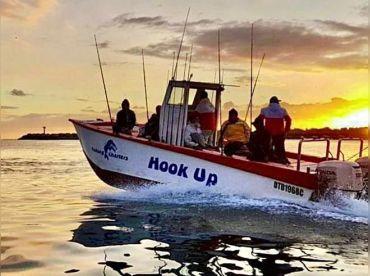
Saltwater Fishing Guides
Cape Town, Western Cape
West Coast Trip
:US $363




Musselcracker fishing targets a powerful, reef-loving Seabream known for thick shoulders, crushing teeth, and stubborn fights. Anglers chase Musselcracker for their strength, wary bites, and the pride of landing a true bruiser. They are also called Black Musselcracker and Poenskop, and they live around rocky structure and reefs.
You will usually target them with bottom fishing around reef edges, pinnacles, and boulder fields. Use strong tackle, abrasion-resistant leader, and stout hooks. Natural baits work best, especially Crab, shellfish, and cut bait. Present baits tight to the rocks, and keep contact with the weight so you can feel light bites.
Expect short, heavy runs and powerful head shakes close to cover. The first few seconds matter most, so set the hook hard and turn the fish away from the reef. This is a great challenge for experienced anglers and a doable goal for keen beginners with guidance. Bring sun protection, non-slip shoes, and a hat. A waist belt or fighting belt helps during long, steady pulls. Handle fish carefully for a healthy release when required.
Before your trip, check local fishing license and permit rules. Review open seasons, size and bag limits, and any area closures. Regulations can change, so confirm current harvest rules and consider catch-and-release where stocks are recovering.
Musselcracker fishing targets a powerful, reef-loving Seabream known for thick shoulders, crushing teeth, and stubborn fights. Anglers chase Musselcracker for their strength, wary bites, and the pride of landing a true bruiser. They are also called Black Musselcracker and Poenskop, and they live around rocky structure and reefs.
You will usually target them with bottom fishing around reef edges, pinnacles, and boulder fields. Use strong tackle, abrasion-resistant leader, and stout hooks. Natural baits work best, especially Crab, shellfish, and cut bait. Present baits tight to the rocks, and keep contact with the weight so you can feel light bites.
Expect short, heavy runs and powerful head shakes close to cover. The first few seconds matter most, so set the hook hard and turn the fish away from the reef. This is a great challenge for experienced anglers and a doable goal for keen beginners with guidance. Bring sun protection, non-slip shoes, and a hat. A waist belt or fighting belt helps during long, steady pulls. Handle fish carefully for a healthy release when required.
Before your trip, check local fishing license and permit rules. Review open seasons, size and bag limits, and any area closures. Regulations can change, so confirm current harvest rules and consider catch-and-release where stocks are recovering.