Ribolov Bonefish
Najbolje od 291 Bonefish ribolovnih ponuda - unesite destinaciju i datume da proverite dostupnost
Najbliži ribolovni čarteri za ribolov Bonefish
- Izbor ribolovcaNeposredna potvrdaTure odUS $1,800
- Neposredna potvrdaTure odUS $550
- Izbor ribolovcaNeposredna potvrdaTure odUS $600
Go Fish Stuart Fishing Charter and Guide 18'.
4.9/5(38 recenzije)Licencirano od državeStuart, FloridaNeposredna potvrdaTure odUS $600- Izbor ribolovcaNeposredna potvrdaTure odUS $700
- Neposredna potvrdaTure odUS $500
- Ture odUS $700
- Ture odUS $500
- Izbor ribolovcaNeposredna potvrdaTure odUS $450
Najbliže destinacije za ribolov Bonefish
Sveži ulovi Bonefish
Istaknuti čarteri za ribolov Bonefish
- Full Day Trip


+5Spend the day fishing the backwaters and flats of the Florida Keys. We'll target inshore favorites like redfish, snook, tarpon, sea trout, and many more. We'll venture into Everglades National Park where wildlife is plentiful. With plenty of time to move between spots and dial in the bite, this trip I would recommend the most if you want the best chance at a memorable fish.Cena za do 2 osobaUS $899 - Izbor ribolovcaNight Trip - 5:00 PM


+8Starting time may vary depending on the tide, weather and fishing conditions. If you have a time that you would prefer to go, let me know I will accommodate you??? it's your fishing trip you let me know what you wanna do. I have a plan, but if you have a special request, I can make it happen. Let us know if you're staying on the water and we can make arrangements for pick-up there.Neposredna potvrdaCena za do 3 osobaUS $700 - Izbor ribolovcaFull Day Trip (Nov-Apr)


+4Fish the Nichupte Lagoon for a vast array of great inshore food and game fish. Top fly fishing favorites like Bonefish and Permit combine with great table fare like Speckled Trout and Mangrove Snappers. These waters are also very close and well sheltered, making them perfect for children of those who suffer from seasickness. There's an additional dock fee/national park fee of US$15 per person.Neposredna potvrdaCena za do 2 osobaUS $500 - Izbor ribolovcahalf day of fishing


+4This schedule is for people who like fishing, but do not like to get up early, we do trolling and bottom fishing, we use live bait, lures jig, we include, cooler with ice, bottles of water, fishing license, let's enjoy a Good day of fishing with the family.Neposredna potvrdaCena za do 5 osobaUS $320 - Izbor ribolovcaFull Day Trip - Marquesas Keys


+6The Marquesas is a beautiful uninhabited island group some 20 miles west of Key West. Tarpon, Permit, Bonefish, Snapper, Sharks, and Barracuda inhabit the surrounding waters around the island. If you're looking to get away from it all this is the spot!Neposredna potvrdaCena za do 4 osobaUS $1,300 - Snokel and lobsterhunt/spearfishing


+3We spend time snorkeling while hunting for lobsters or conch you can also spearfish for four hours at the reef. Up to 4 people.Cena za do 2 osobaUS $350 - Half Day Trip (AM)


+8This 4-hour trip will take you up to 10 miles offshore, where you will target Mahi Mahi, Wahoo, Jack Crevalle, Roosterfish, Pompano, Snapper, and more. The captain will cover your fishing equipment and drinks, so you only need to bring your food and a camera.Neposredna potvrdaCena za do 4 osobaUS $450 - 4 Hour Trip — Bottom Fishing


+6Looking for action and variety on the water? Join No Whiners Sporting for a 4-hour trip that gives you the best of both worlds—trolling for pelagic species like mahi or ono, then shifting gears to bottom fish the reef for local favorites like snapper and trevally. It's a great option for families, first-timers, or anyone short on time but big on fun. All experience levels welcome—let's get you hooked up!Cena za do 6 osobaUS $1,200 - Izbor ribolovca6 Hour Trip OFFSHORE - 12:00 PM


+5A 6-hour offshore fishing charter offers an exciting, action-packed experience for anglers who want to venture into deeper waters and target larger species. On this trip, you'll typically head out to sea, staying within a reasonable distance from shore, usually around 10 to 20 miles depending on local conditions. The goal is to fish in deeper waters, where you can catch species like mahi-mahi, tuna, kingfish, grouper, snapper, sharks, and even sailfish.Neposredna potvrdaCena za do 4 osobaUS $1,200 - Half Day Trip – Sunset Tarpon


+8This trip is built around last light—when tarpon stage up, the water settles, and the evening bite window opensCena za do 4 osobaUS $750
Popularne destinacije za Bonefish ribolov
Šta ribolovci kažu o Bonefish ribolovu
- 5.0/5(6 Hour Trip (AM))
late night tarpon
went out after hours and hooked up with numerous tarpon. hap plenty of bone fish and multiple shots at permit.
- 5.0/5(Full Day Trip – Fly Fishing/spinfis)
Amazing captain and mate
We had several challenges with wind, storms, overcast, etc.. today and with captain nato and Victor's knowledge of these waters they were still able to get us on the fish including the tarpon. We caught several LARGE snapper, huge barracuda, had opportunities at bonefish and most importantly boated tarpon. Tarpon was my main goal of this trip and these two did EVERYTHING to get me on one. Their passion for these waters and sport is like something I've never seen before, can recommend enough!
- 5.0/5(Flats Fishing 4hr)
Blake was great!
This was a first time for this type of fishing and he was very informative and taught us a lot. my first bonefish ever and was a great trip!
- 5.0/5(Half day trip fly fishing or spinfi)
True Belizian experience
Nato and Jose were absolutely incredible. Fishing with them really gave us the local feel and he put me on some great inshore fish. We had a really great time fishing and talking. I highly recommend Nato!
- 5.0/5(Half Day Trip)
Awesome time Bob is the Man!!
Thak you very much, what an awesome time we had we look forward to doing t again real soon!!
O Bonefish ribolovu
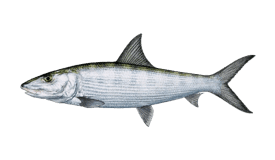
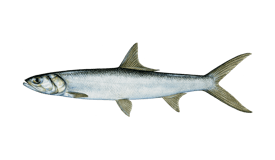
Bonefish are considered to be a holy grail of flats fishing, especially on the fly. These fish use their hydrodynamic constitution to achieve speeds of 40mph, which help them escape their many predators, but also make hundreds of miles of your line strip away within seconds.
Bones are most often found in sandy or grassy flats as shallow as 6'', which they can tolerate on account of having lung-like air bladders. Being very sensitive to noise, they require a subtle approach, which will usually require either wading through the flats or poling on a flat-bottom skiff. Smaller ones are often found in 100+ fish schools, while larger ones will also group up, but with fewer fish.
How big
This species doesn't grow too large, but that doesn't cloud the fact that it's one of the toughest saltwater fighters, pound for pound. In Florida and the Bahamas they will average at 4-6lbs, while down south in the West Indies they'll be about twice that size. In South African and Hawaiian waters they are said to grow up to 20lbs, even though the official world record stands at 16lbs. They live relatively long lives of about 19 years and mature quickly, at 3-4.
When & Where
Bonefish can be found in tropical and subtropical waters worldwide. The highest concentrations are in the western Atlantic, from Nova Scotia to Brazil, including Bermuda, Turks and Caicos Islands and the Caribbean Sea, and excluding the Gulf of Mexico. Additionally, they are commonly found off South Africa, Hawaii and in the eastern Pacific from the SF Bay Area down to Peru, mainly in the San Diego Bay.
The hottest spots include:
- Florida Keys, especially Key West, but also the Biscayne Bay flats
- Andros Island in the Bahamas (but really the entire archipelago)
- Belize, especially Ambergris Caye and Turneffe Atoll
Bonefish can be targeted year-round, but a general rule of thumb will be that larger fish move to deeper waters during hotter months. Due to this, ideal months will be March through May and then again in October, with their return. Moving tides are a prerequisite, but each fishery has their own best times throughout the tides, which can be learned either with experience, or from a knowledgeable guide.

A double hook up is possible if you don't scare the school away. Caught aboard Done Deal in Miami, FL
How to catch
Bonefishing is something of an art form that, if mastered, will contribute immensely to your light tackle skills.
Bones are often spotted trailing or mudding in the crystal clear waters of the flats (polarised sunglasses will be really helpful with this task). If they're busy foraging like this, close casts will be optimal. If they're swimming freely, you should cast at least 6ft away, and make that 10ft if they're schooling. You should never cast over the fish as it might spook them and casting from the side rather than with the rod up is also advised for this reason.
As for bait, live shrimp is the most reliable, but small crabs will sometimes work as well. Shrimp, crab or cut conch are highly recommended to chum with, as it will give the fish something to make them busy while you approach. If no chum is used, either wade the flats or pole the boat, as any motor noise will make them disperse. Natural bait should be retrieved rapidly across the surface as soon as they hit the water and then allowed to sink.
Artificial options include small flatheaded skimmer jigs, various plugs and flies (also aided by chum). Lures should be repeatedly retrieved once they drop in order to create sand puffs in the water.
Good to eat?
As their name says, way too many tiny and large bones on the inside. Due to this and excellent fighting qualities for which the fish is revered, the practice of catch and release is not questioned.

Thank the fish for gracing your hook and release it with a smile. This is how it's done in Islamorada, FL
Regulations
Bonefish are considered to be a holy grail of flats fishing, especially on the fly. These fish use their hydrodynamic constitution to achieve speeds of 40mph, which help them escape their many predators, but also make hundreds of miles of your line strip away within seconds.
Bones are most often found in sandy or grassy flats as shallow as 6'', which they can tolerate on account of having lung-like air bladders. Being very sensitive to noise, they require a subtle approach, which will usually require either wading through the flats or poling on a flat-bottom skiff. Smaller ones are often found in 100+ fish schools, while larger ones will also group up, but with fewer fish.
How big
This species doesn't grow too large, but that doesn't cloud the fact that it's one of the toughest saltwater fighters, pound for pound. In Florida and the Bahamas they will average at 4-6lbs, while down south in the West Indies they'll be about twice that size. In South African and Hawaiian waters they are said to grow up to 20lbs, even though the official world record stands at 16lbs. They live relatively long lives of about 19 years and mature quickly, at 3-4.
When & Where
Bonefish can be found in tropical and subtropical waters worldwide. The highest concentrations are in the western Atlantic, from Nova Scotia to Brazil, including Bermuda, Turks and Caicos Islands and the Caribbean Sea, and excluding the Gulf of Mexico. Additionally, they are commonly found off South Africa, Hawaii and in the eastern Pacific from the SF Bay Area down to Peru, mainly in the San Diego Bay.
The hottest spots include:
- Florida Keys, especially Key West, but also the Biscayne Bay flats
- Andros Island in the Bahamas (but really the entire archipelago)
- Belize, especially Ambergris Caye and Turneffe Atoll
Bonefish can be targeted year-round, but a general rule of thumb will be that larger fish move to deeper waters during hotter months. Due to this, ideal months will be March through May and then again in October, with their return. Moving tides are a prerequisite, but each fishery has their own best times throughout the tides, which can be learned either with experience, or from a knowledgeable guide.

A double hook up is possible if you don't scare the school away. Caught aboard Done Deal in Miami, FL
How to catch
Bonefishing is something of an art form that, if mastered, will contribute immensely to your light tackle skills.
Bones are often spotted trailing or mudding in the crystal clear waters of the flats (polarised sunglasses will be really helpful with this task). If they're busy foraging like this, close casts will be optimal. If they're swimming freely, you should cast at least 6ft away, and make that 10ft if they're schooling. You should never cast over the fish as it might spook them and casting from the side rather than with the rod up is also advised for this reason.
As for bait, live shrimp is the most reliable, but small crabs will sometimes work as well. Shrimp, crab or cut conch are highly recommended to chum with, as it will give the fish something to make them busy while you approach. If no chum is used, either wade the flats or pole the boat, as any motor noise will make them disperse. Natural bait should be retrieved rapidly across the surface as soon as they hit the water and then allowed to sink.
Artificial options include small flatheaded skimmer jigs, various plugs and flies (also aided by chum). Lures should be repeatedly retrieved once they drop in order to create sand puffs in the water.
Good to eat?
As their name says, way too many tiny and large bones on the inside. Due to this and excellent fighting qualities for which the fish is revered, the practice of catch and release is not questioned.