Hero Banner
Hero Banner

Catfish Fishing

The best out of 771 Catfish Fishing deals - enter destination and dates to check availability

Nearest Catfish fishing charters

Over 100 charters in map area
Listing image
23 ft
Up to 4 persons
Listing image
20 ft
Up to 2 persons
Listing image
20 ft
Up to 5 persons
Listing image
20 ft
Up to 3 persons
Listing image
21 ft
Up to 3 persons
Instant Confirmation
Trips from
US $450
Listing image
Meet the Captain
24 ft
Up to 6 persons
Instant Confirmation
Trips from
US $300
Listing image
20 ft
Up to 5 persons
Listing image
32 ft
Up to 6 persons
Listing image
25 ft
Up to 6 persons
Instant Confirmation
Trips from
US $420
Listing image
24 ft
Up to 6 persons

Nearest Catfish fishing charters

Fresh Catfish fishing catches

What anglers say about Catfish fishing

  • 5.0
    /5
    (Half Day Trip)

    great birthday trip

    bones was a great host. he made sure everyone got a fish. highly recommend.
    Leo R.
    Leo R.
    Reviewed on Aug 29, 2026
  • 5.0
    /5
    (Half Day Trip (AM))

    GREAT TIME

    Steve is the best!! Took care of us and we had fun on our tour. Fishing was great and we hand plenty of catch!! would recommend him to anyone!! BTW Goooooo Horns 🤘🏼🤘🏼🤘🏼
    Israel M.
    Israel M.
    Reviewed on Aug 29, 2026
  • 5.0
    /5
    (4-Hour Bay/Jetty Fishing Excursion)

    Best Fishing Trip Ever!

    Captain John was knowledgeable and had a great personality. Almost immediately we started catching fish. We caught several kinds of fish, it was exciting throughout. Thank you Captain John for the wonderful experience.
    Rodney H.
    Rodney H.
    Reviewed on Aug 27, 2026
  • 4.0
    /5
    (Shared AM 5 Hour Trip ALL INCLUSIVE)

    You cant beat these guys

    First time ive ever otten sea sick, but both the captain and deckhand checked on me severl times to make sure i was ok. We caught fish. Could have caught more but the water got rough and wind never relaxed. I will be back with them again. Than you
    Clay T.
    Clay T.
    Reviewed on Aug 27, 2026
  • 5.0
    /5
    (Half Day Trip)

    Best trip ever!!!

    Steve was amazing. Best tour guide ever. He was very patient with us. He was very diverse . Excellent personality and makes you feel comfortable while you're on the boat . I would give him 10 stars if I could I hope to go out on another tour with him again soon.
    Christal T.
    Christal T.
    Reviewed on Aug 27, 2026

About Catfish fishing

Size
2 to 40lbs
Food Value
Good
Game Quality
Average

Catfish are well known freshwater omnivores, so widely distributed that the only continent not hosting them is Antarctica. Regional varieties are extensively targeted throughout the world for their accessibility, availability, good game qualities and excellent flavor.

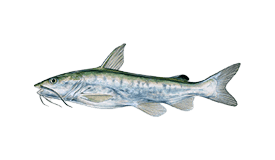
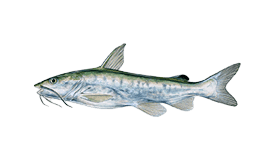
Catfish are a family with numerous subspecies which evolved according to their habitat, with over half of all species distributed throughout the Americas. Most species have elongated barbels around the mouth, after which they get their name. These barbels help locate prey in the absence of light and serve as taste receptors.

How big

The Channel Catfish (Ictalurus punctatus) is the smallest, known to attain weights up to 60lbs, but commonly caught only up to 10lbs. The Blue Catfish (Ictalurus furcatus) is the largest, growing up to 150lbs and caught on average between 20 and 40lbs. The Flathead Catfish (Pylodictis olivaris) is substantial as well, with the largest catch on record 123lbs and with frequent catches between 5 and 15lbs. The White Catfish (Ameiurus catus) is closer to the family of Bullheads. They grow up to 20lbs, but the majority are caught only between 1 and 3lbs. Gafftopsail Catfish (Bagre marinus) are the smallest of the bunch and are most frequent up to 2lbs.

Fisherman with Blue Catfish in Florida

A fat Blue reeled in with Cathunter's Freshwater Guides in Pensacola, FL

When & Where

The five major mentioned Catfish species are abundant in North America:

  • The Channel Catfish is common thoughout central USA and can be found in northern Mexico and southern Canada. They migrate actively throughout river tributaries and streams during spawning season.
  • The Blue Catfish is native to the major rivers of the Ohio, Mississippi and Missouri basins. They can also be found north to South Dakota and Minnesota, east to the Panhandle and south to Mexico and Guatemala. They have been artificially introduced to rivers in Virginia. They like fast currents and are active throughout winter as well.
  • The Flathead Catfish can be found throughout the Blue Catfish range, but extends farther east to Lake Eerie. They have been broadly introduced outside this range.
  • The White Catfish inhabits coastal waters of the western Atlantic from New York to central Florida. It's been introduced to Texas and throughout the west coast.
  • Gafftopsail Catfish are distributed throughout the southeastern USA as north as New York and throughout the Gulf coast. They spawn inshore May through August.

How to catch

Catfish will mostly go for natural bait. The type will depend on the prey available in the specific region, but any small baitfish should work, including herrings, shad, goldeye or mullet. They are very effective when cut, because of the oils they release into water, but whole bait will gladly be taken as well, especially if alive and active. Crawfish and night crawlers are also excellent bait choices, if available. Various jig heads with bait will also be successful.

The most common rigs used for targeting Catfish are slip-sinker rigs, with optional floaters to suspend the bait closer to the surface. This will depend on where in the water column the particular species feeds.

Catfishing should be done either early in the morning or at night. Foraging Catfish can often be spotted around weedy areas in shallow waters at night time, when their barbels give them an edge over resting prey.

Flathead Catfish fishing at night

Flathead Catfish picked up at night with Flathead Catfish Hunters in Pensacola, FL

Good to eat?

Most Catfish are succulent and mild in flavor.

Regulations

Bag and size limits should be checked for individual species on the state websites for parks & wildlife / fishing & hunting or in local tackle shops.

Catfish are well known freshwater omnivores, so widely distributed that the only continent not hosting them is Antarctica. Regional varieties are extensively targeted throughout the world for their accessibility, availability, good game qualities and excellent flavor.

Catfish are a family with numerous subspecies which evolved according to their habitat, with over half of all species distributed throughout the Americas. Most species have elongated barbels around the mouth, after which they get their name. These barbels help locate prey in the absence of light and serve as taste receptors.

How big

The Channel Catfish (Ictalurus punctatus) is the smallest, known to attain weights up to 60lbs, but commonly caught only up to 10lbs. The Blue Catfish (Ictalurus furcatus) is the largest, growing up to 150lbs and caught on average between 20 and 40lbs. The Flathead Catfish (Pylodictis olivaris) is substantial as well, with the largest catch on record 123lbs and with frequent catches between 5 and 15lbs. The White Catfish (Ameiurus catus) is closer to the family of Bullheads. They grow up to 20lbs, but the majority are caught only between 1 and 3lbs. Gafftopsail Catfish (Bagre marinus) are the smallest of the bunch and are most frequent up to 2lbs.

Fisherman with Blue Catfish in Florida

A fat Blue reeled in with Cathunter's Freshwater Guides in Pensacola, FL

When & Where

The five major mentioned Catfish species are abundant in North America:

  • The Channel Catfish is common thoughout central USA and can be found in northern Mexico and southern Canada. They migrate actively throughout river tributaries and streams during spawning season.
  • The Blue Catfish is native to the major rivers of the Ohio, Mississippi and Missouri basins. They can also be found north to South Dakota and Minnesota, east to the Panhandle and south to Mexico and Guatemala. They have been artificially introduced to rivers in Virginia. They like fast currents and are active throughout winter as well.
  • The Flathead Catfish can be found throughout the Blue Catfish range, but extends farther east to Lake Eerie. They have been broadly introduced outside this range.
  • The White Catfish inhabits coastal waters of the western Atlantic from New York to central Florida. It's been introduced to Texas and throughout the west coast.
  • Gafftopsail Catfish are distributed throughout the southeastern USA as north as New York and throughout the Gulf coast. They spawn inshore May through August.

How to catch

Catfish will mostly go for natural bait. The type will depend on the prey available in the specific region, but any small baitfish should work, including herrings, shad, goldeye or mullet. They are very effective when cut, because of the oils they release into water, but whole bait will gladly be taken as well, especially if alive and active. Crawfish and night crawlers are also excellent bait choices, if available. Various jig heads with bait will also be successful.

The most common rigs used for targeting Catfish are slip-sinker rigs, with optional floaters to suspend the bait closer to the surface. This will depend on where in the water column the particular species feeds.

Catfishing should be done either early in the morning or at night. Foraging Catfish can often be spotted around weedy areas in shallow waters at night time, when their barbels give them an edge over resting prey.

Flathead Catfish fishing at night

Flathead Catfish picked up at night with Flathead Catfish Hunters in Pensacola, FL

Good to eat?

Most Catfish are succulent and mild in flavor.

Regulations

Bag and size limits should be checked for individual species on the state websites for parks & wildlife / fishing & hunting or in local tackle shops.