Hero Banner
Hero Banner

Snook Fishing

The best out of 1658 Snook Fishing deals - enter destination and dates to check availability

Nearest Snook fishing charters

Over 100 charters in map area
Angler's Choice
Listing image
26 ft
Up to 4 persons
Instant Confirmation
Trips from
US $595
Listing image
24 ft
Up to 4 persons
Listing image
Up to 6 persons
Listing image
Up to 6 persons
Listing image
24 ft
Up to 3 persons
Listing image
22 ft
Up to 4 persons
Listing image
20 ft
Up to 2 persons
Up to 3 miles
Instant Confirmation
Trips from
US $475
Listing image
Meet the Captain
21 ft
Up to 4 persons
Up to 3 miles
Instant Confirmation
Last booking: 1 day ago
Trips from
US $425
Listing image
21 ft
Up to 4 persons
Instant Confirmation
Trips from
US $500
Listing image
23 ft
Up to 3 persons
Instant Confirmation
Last booking: 2 days ago
Trips from
US $475

Nearest Snook fishing charters

Fresh Snook fishing catches

What anglers say about Snook fishing

  • 5.0
    /5
    (3 Hour Fishing)

    Inshore slam complete!!

    Angelo is great! We caught 8 species including the infamous “Inshore Slam.” Put us on the fish all day long! We never sat on a dead bite, he wasn’t having it. We would move and be back on fish again! Take the trip, you won’t be disappointed. I can see why he’s rated 5 Stars.
    Mark T.
    Mark T.
    Reviewed on Aug 29, 2026
  • 5.0
    /5
    (Half Day Trip – Inshore (AM))

    Awesome experience!

    Captain Dustin was awesome and knowledgeable. Very cool experience, caught plenty of fish and was fortunate enough to get a slot sized redfish for lunch! Will definitely book again!
    Douglas B.
    Douglas B.
    Reviewed on Aug 29, 2026
  • 5.0
    /5
    (Full Day Fishing Trip 2 ppl 4 max)

    Three Firsts!

    My son (9) had his first scalloping experience, caught his first redfish, and caught his first snook (plus 2 more). And we completed the inshore grand slam with some sea trout. Great day on the water!
    Jeff S.
    Jeff S.
    Reviewed on Aug 29, 2026
  • 5.0
    /5
    (4 Hr – Inshore Charter - 8:00 AM)

    Awesome Day

    Mike was great kept us moving all over to ensure fish were caught and kept us away from the storms. We caught Trout, Red Fish, Coiba, and Lady Fish. Great experience and would definitely book again with Mike.
    Kelly H.
    Kelly H.
    Reviewed on Aug 28, 2026
  • 5.0
    /5
    (1/2 Day Eco – Tour/Fishing Trip)

    Excellent fishing experience

    What a great fishing experience! Captain Jack knows the best fishing spots! We caught a lot of fish and many different kinds of fish to mention them all. We even had a great dolphin and manatee experience.
    Richard S.
    Richard S.
    Reviewed on Aug 26, 2026

About Snook fishing

Size
3 to 15lbs
Food Value
Good
Game Quality
Excellent

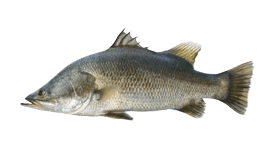
Otherwise known as Robalo, Snook are some of America's favorite inshore game fish. They're easy enough to find, but take some finesse to bag. Practice pays off though, as these fish are highly appreciated table fare.

Snook encompass a diverse family with 6 species in the Atlantic and 6 in the Pacific ocean. They all tolerate a wide range of salinity levels and so can be found in many riverine estuaries, mangrove forests, salt marshes, sea grass meadows, but over nearshore reefs as well. They move seasonally between fresh and salt waters, but always stay close to shore.

Snook are very sensitive to water temperatures. Adults have trouble surviving in waters less than 50°F, and juveniles can not stand waters under 60°F. There was a cold snap in January 2010 that decimated the Snook population of the southwestern Florida waters. Due to this, they were under strict catch-and-release governance until September 2013, and still remain protected by bag limits. They are hermaphrodites and fast maturers and this helps rebuild the numbers.

How big

Snook are diverse fish in terms of size and weight, with adults ranging from several inches up to 50'' in length. The common Atlantic Snook catch will be about 10-20'' and between 3 and 15lbs. Pacific Snook are normally larger on average. They are estimated to live up to 20 years.

Angler with big Snook in Puerto Rico

Reeled in aboard Bayside Fishing Charters of San Juan, Puerto Rico

When & Where

Atlantic Snook have been reported to spread as far north as New York and as far south as Rio, including the Caribbean Sea. In Florida, where they're most abundant, they can be found in the Gulf coast up to Cedar Key, with Tampa Bay and Charlotte Harbor as hotspots, and on the Atlantic coast from Cape Canaveral to the Keys, especially off Miami and Ft Lauderdale.

In the Gulf of Mexico, they are also caught off Texas, southwards along the coastline starting around Corpus Christi (at times as north as Galveston). For an extensive list of hotspots for Snook, check out this Florida Sportsman guide listing 20 excellent beaches and inlets throughout the state.

Pacific Snook can be caught in the Magdalena Bay and southwards along the coast of the Baja California Peninsula, in the southern Gulf of California, and along the coast of Mexico down to Guatemala. Southern fisheries are more abundant.

The months of May through September will be the best time to target Snook due to the water temperatures, with the hottest months seeing these fish go deep inshore. Nights and very early mornings are good times.

How to catch

When feeding, Snook face towards the current, waiting for the flow of water to bring prey to them. The bait should be cast correspondently and allowed to drift downstream.

Snook prefer live shrimp or small baitfish such as pinfish, mullet, menhaden, goggle eyes, pilchards etc. If using artificials, the best choice will be feather jigs with plastic worm tails or trolling plugs.

If using natural bait, you should let the fish run on free spool for 4-5 seconds before setting the hook. If artificials are being used, however, set the drag tight and start reeling as soon as you feel the bite. After the hit, no slack should be given off, as it might cross the fish's head and get severed on the razor-sharp gill covers. This technique takes a while to master, but a good guide can make the learning curve much more favorable.

Our definitive guide to Snook fishing holds all the information you'd possibly want to know about catching these fish and can be found right HERE.

Group of fishermen with Snook in Florida

This guy didn't stand a chance! Caught in St Pete, FL

Good to eat?

Delicate white, flaky meat of excellent taste. Be sure to remove the skin, as it gives off a soapy flavor.

Regulations

        USA:
 
  • Season - Florida - Atlantic waters (state and adjacent federal) - open February 1 - May 31 and September 1 - December 14; Gulf waters, Monroe County, and Everglades National Park (state and adjacent federal waters) - open March 1 - April 30 and September 1 - November 30; Collier County to the Pasco/Hernando county line, catch and release only. Other states have no specific regulations.
  • Size limit - Florida - 28 to 32'' (Atlantic waters) or 33'' (Gulf waters); Texas - 24 to 28''; other states have no size regulations;
  • Bag limit (per angler per day) - 1 for Florida (if holding both a valid Florida saltwater fishing license and a Snook stamp) and Texas; other states have no bag regulations;
 
         Mexico allows up to 5 fish per angler.
 

Otherwise known as Robalo, Snook are some of America's favorite inshore game fish. They're easy enough to find, but take some finesse to bag. Practice pays off though, as these fish are highly appreciated table fare.

Snook encompass a diverse family with 6 species in the Atlantic and 6 in the Pacific ocean. They all tolerate a wide range of salinity levels and so can be found in many riverine estuaries, mangrove forests, salt marshes, sea grass meadows, but over nearshore reefs as well. They move seasonally between fresh and salt waters, but always stay close to shore.

Snook are very sensitive to water temperatures. Adults have trouble surviving in waters less than 50°F, and juveniles can not stand waters under 60°F. There was a cold snap in January 2010 that decimated the Snook population of the southwestern Florida waters. Due to this, they were under strict catch-and-release governance until September 2013, and still remain protected by bag limits. They are hermaphrodites and fast maturers and this helps rebuild the numbers.

How big

Snook are diverse fish in terms of size and weight, with adults ranging from several inches up to 50'' in length. The common Atlantic Snook catch will be about 10-20'' and between 3 and 15lbs. Pacific Snook are normally larger on average. They are estimated to live up to 20 years.

Angler with big Snook in Puerto Rico

Reeled in aboard Bayside Fishing Charters of San Juan, Puerto Rico

When & Where

Atlantic Snook have been reported to spread as far north as New York and as far south as Rio, including the Caribbean Sea. In Florida, where they're most abundant, they can be found in the Gulf coast up to Cedar Key, with Tampa Bay and Charlotte Harbor as hotspots, and on the Atlantic coast from Cape Canaveral to the Keys, especially off Miami and Ft Lauderdale.

In the Gulf of Mexico, they are also caught off Texas, southwards along the coastline starting around Corpus Christi (at times as north as Galveston). For an extensive list of hotspots for Snook, check out this Florida Sportsman guide listing 20 excellent beaches and inlets throughout the state.

Pacific Snook can be caught in the Magdalena Bay and southwards along the coast of the Baja California Peninsula, in the southern Gulf of California, and along the coast of Mexico down to Guatemala. Southern fisheries are more abundant.

The months of May through September will be the best time to target Snook due to the water temperatures, with the hottest months seeing these fish go deep inshore. Nights and very early mornings are good times.

How to catch

When feeding, Snook face towards the current, waiting for the flow of water to bring prey to them. The bait should be cast correspondently and allowed to drift downstream.

Snook prefer live shrimp or small baitfish such as pinfish, mullet, menhaden, goggle eyes, pilchards etc. If using artificials, the best choice will be feather jigs with plastic worm tails or trolling plugs.

If using natural bait, you should let the fish run on free spool for 4-5 seconds before setting the hook. If artificials are being used, however, set the drag tight and start reeling as soon as you feel the bite. After the hit, no slack should be given off, as it might cross the fish's head and get severed on the razor-sharp gill covers. This technique takes a while to master, but a good guide can make the learning curve much more favorable.

Our definitive guide to Snook fishing holds all the information you'd possibly want to know about catching these fish and can be found right HERE.

Group of fishermen with Snook in Florida

This guy didn't stand a chance! Caught in St Pete, FL

Good to eat?

Delicate white, flaky meat of excellent taste. Be sure to remove the skin, as it gives off a soapy flavor.

Regulations

        USA:
 
  • Season - Florida - Atlantic waters (state and adjacent federal) - open February 1 - May 31 and September 1 - December 14; Gulf waters, Monroe County, and Everglades National Park (state and adjacent federal waters) - open March 1 - April 30 and September 1 - November 30; Collier County to the Pasco/Hernando county line, catch and release only. Other states have no specific regulations.
  • Size limit - Florida - 28 to 32'' (Atlantic waters) or 33'' (Gulf waters); Texas - 24 to 28''; other states have no size regulations;
  • Bag limit (per angler per day) - 1 for Florida (if holding both a valid Florida saltwater fishing license and a Snook stamp) and Texas; other states have no bag regulations;
 
         Mexico allows up to 5 fish per angler.