Jan 12- Feb 6th Lake Havasu Fishing Repo

February 06, 2026 Lake Havasu City 11 photos
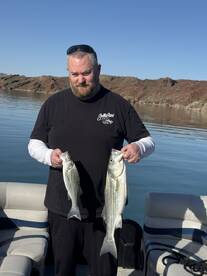
Bass (Striped)
Bass (Striped)
Bass (Largemouth)
Bass (Largemouth)
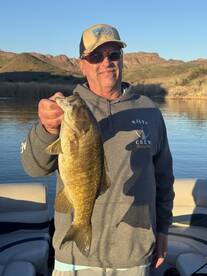
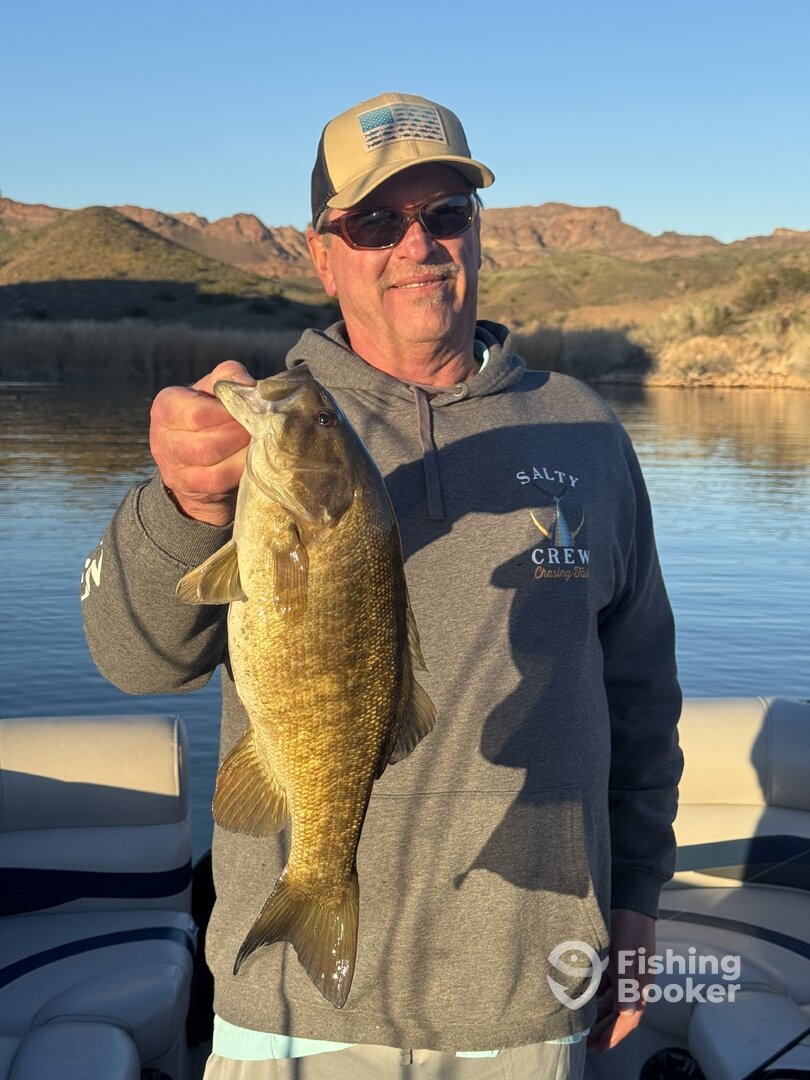
Bass (Smallmouth)
Bass (Smallmouth)
American Shad
American Shad

Trip Summary

Lake Havasu continues to fish like winter, with water temperatures holding steady in the mid-50s and days slowly starting to get longer. While conditions haven’t changed drastically temperature-wise, the biggest shift over the last few weeks has been in how we’re targeting stripers. We’ve started throwing the cast net for shad and incorporating live bait into the program, which has made a big difference on certain days. My live shad setup has been simple and effective: 30 lb braid to a 24-inch 15 lb fluorocarbon leader, rigged with a small circle hook and as little weight as possible depending on the depth the fish are holding. Boils are still popping up periodically, and when they do, it’s been game on. During those moments, I’m still throwing Rapala CrushCity swimbaits on a 1 oz jig head. In several of the same coves where stripers have pushed shad shallow, we’ve also caught a surprising number of both smallmouth and largemouth bass mixed in with the stripers, all feeding aggressively on the same baitfish. Fishing over this stretch has been a true mix of highs and lows. The good days have been unforgettable, with fast action and aggressive fish that make winter fishing worth every cold morning. On the flip side, the tough days have been grind-it-out kind of days. Even when you’re marking shad and stripers stacked together, it doesn’t always mean the bite is on, which is just part of winter fishing on Havasu. I only have a few open dates left for February

Kenneth Probst
Lake-havasu-city, California, United States
Capt.Kenne Charters – Lake Havasu thumbnail
Welcome to Capt. Kenne Charters, based in beautiful Lake Havasu City! Book your next fishing adventure with us and discover what makes these waters so special. With Captain Kenneth at the helm, you'll benefit from years of knowledge and experience as...

Other reports from this charter

Lake Havasu Fishing Report – September 2
September 24, 2026
Fall Fishing Is Heating Up on Lake Havasu Fall is beginning to show itself on Lake Havasu, and the fishing is responding. Cooler mornings and falling water temperatures are pushing the lake out of its summer pattern, while huge concentrations of baitfish are creating some excellent opportunities throughout the fishery. Over the last couple of weeks, I've seen morning water temperatures fall into the upper 70s to around 80 degrees. We're seeing more bird activity, more surface boils and some very aggressive feeding when we locate the right school of striped bass. The recent striper numbers speak for themselves. We've had 29 stripers in roughly two hours, 34 fish during a three-hour trip, several other 30-plus-fish outings, and one incredible trip where two anglers caught 75 striped bass, with most of those fish measuring 15–20 inches. Stripers are definitely the headline right now, but they're far from the only reason to fish Havasu this fall. The cooling water also creates opportunities for largemouth bass, smallmouth bass, channel catfish, flathead catfish, redear and other sunfish. Striped Bass The biggest key to catching Lake Havasu stripers right now is finding the bait. Large concentrations of bait have been showing up throughout the lake, including around Havasu Landing, the casino area, Mesquite Bay and north of Windsor. However, finding bait doesn't necessarily mean you've found the size of fish you want. We've encountered schools of smaller stripers around the 12-inch range and then moved to find much better fish in the 15–20-inch class. On one recent three-hour trip, we initially found plenty of bait and smaller stripers around the casino. Instead of staying there, we moved toward Mesquite Bay, where we marked a much better school. Birds began working the surface as stripers pushed bait up underneath them, and we finished the trip with 34 fish. Our biggest numbers trip recently produced 75 stripers for two anglers, with the majority measuring approximately 15–20 inches. When you find the right school, the action can be extremely fast. Birds & Surface Boils Bird activity is becoming increasingly important. Stripers are pushing bait toward the surface, and birds can reveal feeding fish long before you get close enough to see the boil yourself. If birds are diving, circling tightly or repeatedly working one small area, it's worth investigating. Keep a casting rod rigged and ready because these opportunities can happen quickly. When approaching a boil, avoid running directly through the school with the big motor. Come off plane before reaching the fish and work the outside edge whenever possible. Driving through the middle of actively feeding stripers can push them down and shorten the feeding window. Trolling for Stripers When fish aren't actively feeding on the surface, trolling has been one of our most consistent techniques. We've been catching fish trolling Cotton Cordell jigs and crankbaits at approximately 2.5 mph, with one particularly productive pattern occurring along windblown banks in approximately 25 feet of water. Wind can concentrate bait along these banks, and the stripers aren't usually far behind. Electronics are extremely important. I'm looking for concentrations of bait first and then larger marks around or underneath those bait schools. Once we locate a productive area, we'll make repeated passes instead of continuing to troll through empty water. As we move farther into fall, expect these fish to continue following the bait rather than staying locked onto one location. Yesterday's waypoint isn't nearly as valuable as what your electronics and the birds are telling you today. Largemouth & Smallmouth Bass Lake Havasu has an outstanding largemouth and smallmouth bass fishery, and fall is a great time to target both species. The same cooling trend that's changing the striper bite also affects the black bass. As water temperatures move away from the summer highs, bass can begin spending more time actively feeding and taking advantage of the lake's abundant forage. The big thing to focus on during the fall transition is where bait and structure come together. For largemouth, pay close attention to vegetation, tules, pockets, docks, protected coves, points and shoreline cover. Areas that combine good cover with easy access to deeper water are especially worth working. For smallmouth, rocky structure becomes particularly important. Rocky points, ledges, drop-offs, transitions and other hard-bottom areas can all hold fish. Don't assume every bass is sitting against the bank, either. If bait is holding farther offshore, both largemouth and smallmouth can move with it. Fall Bass Presentations Fall gives bass anglers a lot of options because fish may be feeding at several different depths throughout the day. Crankbaits, jerkbaits, swimbaits and other moving presentations are excellent for covering water and locating active fish. When the moving-bait bite slows
Continue reading
Lake Havasu Fishing Report — August 25,
August 25, 2026
Sunrise: 6:05 AM Sunset: 7:12 PM Water Temperature: High 80s at sunrise, climbing into the low 90s by late afternoon We are officially getting into that late-summer Lake Havasu pattern. Water temperatures are already in the high 80s at sunrise and have been pushing into the low 90s by the end of the day. Both the watermilfoil and coontail grass that we typically see late in the summer are really starting to take over the backs of the coves. In a lot of areas, that grass has grown all the way to the surface and is beginning to form some pretty substantial mats. That can make fishing frustrating, but don't overlook it! Within the last week, we've caught tons of largemouth bass, sunfish, and channel catfish from underneath and along the edges of these grass mats. Largemouth & Smallmouth Bass The grass is definitely one of the biggest things I'm paying attention to right now. The trick has been patience. Instead of constantly fighting the vegetation, find openings, holes, points, and outside edges in the grass where you can get your bait into a clean strike zone. Once you find one, don't be in a hurry to move your bait. Let that soft plastic stay in the opening as long as possible. A lot of these fish are sitting underneath the grass in the shade, and sometimes they need a little time to find your bait. A few soft-plastic presentations I really like right now: Texas-Rigged Creature Bait: A 4"-5" craw or creature-style bait rigged weedless with a 3/8- to 1/2-ounce tungsten weight is perfect for pitching into openings in the grass. Peg the weight if you're trying to punch through thicker vegetation. Let it fall to the bottom, shake it a couple of times, and then let it sit. Don't immediately reel it back in. Weightless Texas-Rigged Senko: Around thinner grass and larger openings, a 5" Senko rigged weightless and weedless can be deadly. Cast it into the opening and let it slowly fall on slack line. Most of your bites are going to happen on that initial fall. Dropshot: On the outside edge of the grass, try a 4"-6" straight-tail worm on a dropshot. Use enough weight to maintain bottom contact. Instead of working it aggressively, keep the weight planted and lightly shake the worm in place. Pay particular attention to any isolated holes or irregularities in the grass. Those little openings can concentrate several fish into a surprisingly small area. Sunfish The grass has also been holding a ton of sunfish. A live nightcrawler continues to be hard to beat. Find an opening in the vegetation and get that crawler down into the clear water underneath the mat. I've been having the best luck keeping the bait in that strike zone instead of constantly moving it around. Give those fish time to come out from underneath the vegetation and find it. A dropshot with a small Aberdeen hook and a piece of nightcrawler is still one of my favorite ways to target these fish. Use a heavier dropshot weight than you normally might so you can maintain good contact with the bottom and get through some of that vegetation. Striped Bass Schools of smaller-class stripers can currently be found all over Lake Havasu, especially immediately before and just after daybreak. Watch the surface! These fish are chasing schools of shad, and when you see birds working or shad exploding out of the water, there's a good chance stripers are underneath them. One of my first choices is still a 3"-4" white or pearl swimbait on a 1/4- to 3/8-ounce jig head. Cast past the boiling fish, let it sink for a second, and retrieve it quickly through the school. Small topwater walking baits and poppers are another great option when they're actively pushing shad to the surface. If the fish stop boiling, don't automatically leave. Often those stripers simply dropped underneath the bait. Try letting a white swimbait or jigging spoon sink below where the boil was and work the water column. Match the hatch! These fish are keyed in on relatively small shad right now, so downsizing your presentation can make a huge difference. And keep a rod ready. These boils can appear out of nowhere and disappear just as quickly. Catfish The catfish are officially off their beds and feeding aggressively! We've had some very successful nights targeting both channel cats and flatheads with live and cut bait. I'm concentrating on deeper holes with steep transitions, ledges, and structure, especially anywhere I'm finding concentrations of sunfish. Find the food and there's a good chance you'll find catfish nearby. I've been fishing a 10/0 circle hook with either a sliding rig or a bottom-bouncing rig depending on the area we're fishing. And don't sleep on the cut bait! We've had plenty of flatheads eating cut bait, sometimes just as readily as the live bait. If I'm fishing several rods, I like having both options in the water and letting the fish tell me what they want that night. The late-summer night bite is really starting to get fun!
Continue reading
Lake Havasu Fishing Report – June 19, 20
June 19, 2026
Summer has officially settled into Lake Havasu. Temperatures have been hot, the wind has been a regular challenge, and water temperatures are now well into the 80's and still climbing. I've been extremely busy with both party charters and fishing charters, but I finally found a moment to sit down and put together a fishing report. With the spawn now behind us for all of our major species, it's time to start focusing on post-spawn patterns. Largemouth & Smallmouth Bass Soft Plastic Pattern Post-spawn bass are beginning to slide off the banks and set up around secondary points, rock transitions, submerged brush, and offshore structure. One of my favorite techniques right now is a dropshot or Texas-rigged soft plastic. Four to six-inch Roboworms, Senkos, and small creature baits have been producing well. Target the areas around Copper Canyon, Thompson Bay, the points around California Bay, and rocky structure near Steamboat Cove. Focus on depths from 15-30 feet and pay close attention to isolated brush piles and rock piles. Early mornings and late evenings have been especially productive. Crankbait Pattern For anglers looking to cover water, medium-diving crankbaits have been excellent. Shad and crawfish patterns fished along chunk rock banks, tapering points, and ledges have been producing both largemouth and smallmouth. Some of my favorite areas include the points around the north basin, the mouth of Castle Rock Bay, and rocky banks between Site Six and Copper Canyon. Deflecting a crankbait off rock and keeping it in the 10-20 foot range has been triggering reaction bites from bass that are feeding up after the spawn. Sunfish I am still catching quality sunfish, but the bigger ones have moved deeper and are holding tight to structure that provides shade and cover. I am finding plenty of medium and smaller fish tucked up in the reeds. If you're fishing the reeds on bright bluebird days, expect the fish to be buried tight against the cover. When we get a little cloud cover, they seem much more willing to venture out and feed. A dropshot rig with a fairly heavy weight to maintain bottom contact, paired with a small Aberdeen hook tipped with a chunk of nightcrawler, has been getting the job done consistently. Striped Bass This post-spawn striped bass bite has been a little funky in my opinion. Some days have been fantastic and other days we've had to work hard for just a few fish. I've still been catching quality stripers in the 2-5 pound range by trolling before sunrise with the newer 6.5" Live Target swimbaits at around 2.5 mph using leadcore line. I've been seeing massive schools of 1-2 pound fish boiling all over the lake, especially in the north basin just north of Windsor State Park. Topwater poppers have had some success, but 3.5" white swimbaits have definitely been the ticket for getting those schooling fish to commit. Of course, I've continued to rely on the tried-and-true white fluke on a Pulse Jig head while trolling, and it continues to produce fish. However, lately I've been dealing with a lot of short strikes, which tells me the fish are feeding but aren't fully committed. Catfish Both flathead and channel catfish are definitely in their post-spawn phase, and I expect this bite to only continue improving. We've had some incredible nights chasing these fish with both live and cut bait. Some nights have been absolutely nonstop with runs, while others have been a little slower, but overall the bite has been trending upward. With the next full moon arriving on June 29th, I fully expect the night bite to continue ramping up.
Continue reading